



Looking for a Shorter Overview?
AI Summary
Key Moments
Synlighetsgap och AI-dimma
Många företag saknar kontroll över hur kunder hittar dem online, vilket skapar en osäkerhet kring digital tillväxt.Sveriges låga AI-beredskap
Only a quarter of Swedish companies consider themselves ready for AI's impact on customer discovery.Småföretag riskerar att halka efter
Mindre företag i Sverige och EU är mer oförberedda på AI-förändringar än större företag.Vikten av mobiloptimerade hemsidor
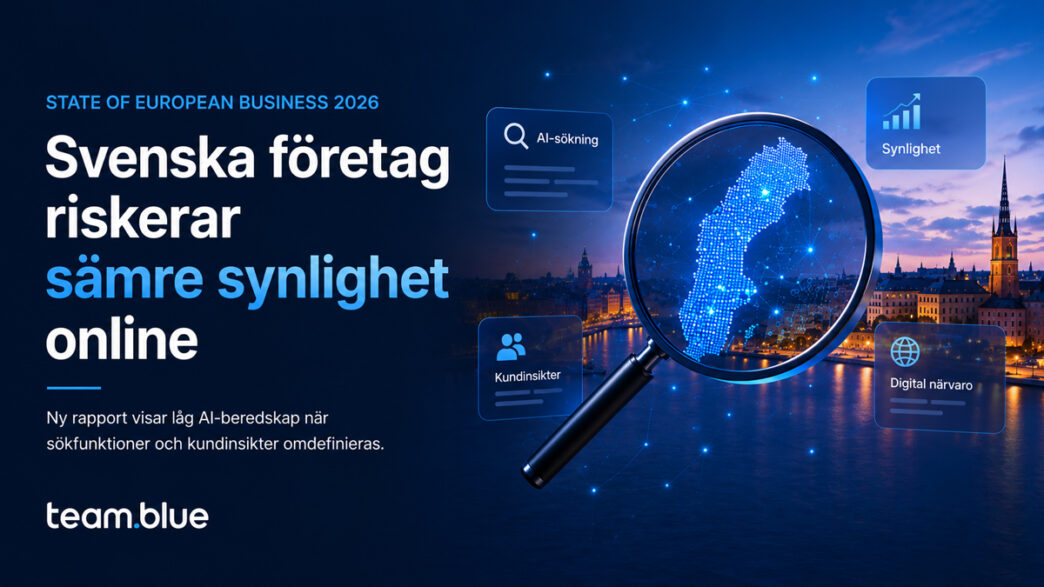
Mindre än hälften av svenska företags webbplatser är fullt mobiloptimerade, vilket är under genomsnittet i Europa.According to the first annual State of European Business report from team.blue, a provider of digital ecosystems, European companies are finding it harder than ever to reach customers online and are grappling with a lack of clarity around what factors are actually driving growth.
The study, which was conducted among over 10,000 companies in 32 countries, warns of a ”visibility gap” among European companies, where a growing gap between digital presence and the ability to understand, influence and measure how customers discover their brand affects how companies are seen online.
The way customers discover businesses is changing faster than most people can keep up. Nearly one in three (30.6%) say it has become more difficult to reach customers online in the past two years. The customer discovery landscape is both richer and more fragmented – a development that team.blue calls for ”"the visibility economy"”.


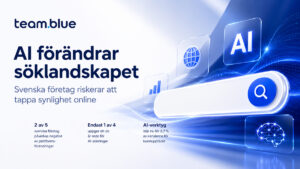

Greater uncertainty about how customers find companies
The biggest challenge to reaching customers on a European level is changing algorithms (38.8%). In Sweden, the largest proportion (37.2%) believes that high competition is the biggest obstacle to their business, followed by the cost of advertising (32.4%) and changing algorithms (32%).
Together, these challenges make it harder than ever to predict what actually drives online visibility and customer engagement. Many companies are experiencing what’s known as AI fog: uncertainty about which channels and activities are actually driving growth, and it’s particularly evident in companies’ own understanding of their digital visibility. Only 5.5 percent say they have full control over how customers discover them online, while more than a third (37.7%) believe they have little or no control at all.
Sweden's AI readiness is low – small companies risk falling behind
The challenge is not only about navigating today's competitive digital landscape, but also about preparing for how AI could change the way customers find products, services, and brands in the years to come.
Three quarters (75.2%) of European companies believe that AI will change how customers discover companies online, but fewer than one in three companies (29.6%) consider themselves prepared for these changes. Sweden's AI readiness is also lower than average: only a quarter of companies (25.9%) believe they are ready.
The preparedness gap is particularly evident among smaller companies, which, according to Eurostat, make up 99 percent of all companies in the EU and employ almost half (48%) of the region’s workforce. Companies with fewer than 50 employees were more than twice as likely (30.7%) as larger companies (13.7%) to report feeling unprepared for the changes driven by AI. The same trend is seen among small Swedish companies, which report a preparedness gap of 48.3 percentage points compared to the average of 42.8 percentage points.
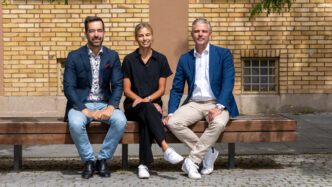
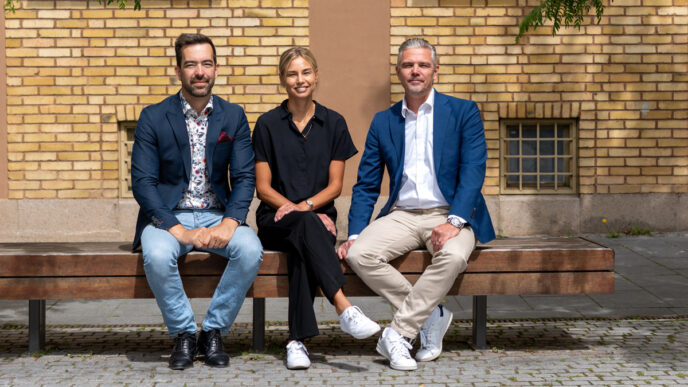
“We are in a period of major changes in how businesses are discovered online. Customers are finding businesses through more channels than ever before, while AI is changing how information is presented, highlighted and recommended. Many businesses are aware that this change is underway, but our research shows that they don’t always feel prepared for what lies ahead,”, says Claudio Corbetta, CEO of team.blue.
Despite the rapid penetration of AI, the ability of AI tools to drive customer discovery has not yet had its full impact. Only six percent of Swedish companies respond that customers find their brand through AI tools, and the survey rather indicates that social media dominates this segment. Over half (53.4%) respond that they reach customers via social media, which is above the European average (48.5%). The largest proportion of Swedish companies (37.9%) believe that social media is their most important platform, which beats Google Search which is the most important platform for European companies (35.7%).
Visibility starts with owned channels
As companies navigate changing digital channels, many are not utilizing one of the few digital assets they have complete control over: their website. In Sweden, only 80.9 percent say they have a website, and less than half (49.7%) say it is fully mobile-optimized. Both figures are below the European average, where 86.5 percent have a website and 55.3 percent are mobile-optimized.
“AI is changing how consumers move online, but less than a third of European companies feel ready for AI – and Sweden is falling below average. The rules of the game are changing and the focus for Swedish businesses should be on managing their visibility before the brand disappears into an impenetrable AI fog. A strong digital foundation is crucial to maintaining control online and to securing continued growth, something that is made possible with the right tools and partnerships,” says Alexander Liljeblad, Commercial Director Loopia, part of team.blue.
Only one in ten (10.1%) in Sweden track how website visitors convert to leads or customers, and over three in five (63.1%) say they don’t track this information at all. This represents a huge opportunity for companies to gain better insight into which channels drive growth and increase understanding of how customers move from discovering a company or brand to making a purchase.
The full report is available here.
Methodology
The results are based on the survey State of European Business 2026, which was commissioned by team.blue and conducted in early 2026. The survey gathered responses from 10,059 companies across eleven European markets: Belgium, Bulgaria, Denmark, Ireland, Italy, the Netherlands, Slovakia, Spain, Sweden and the UK. Respondents represent organizations of all sizes, from freelancers and sole traders to large enterprises.
About team.blue
team.blue is a leading European provider of AI-powered digital services for businesses and entrepreneurs, serving over 3.3 million small and medium-sized business customers in 22 countries. The company acts as a one-stop shop for web hosting, domain names, e-commerce, digital compliance, lead generation and others SaaS solutions, supported by more than 4,000 specialists. The company's vision is to make it easier to succeed in online business by integrating AI capabilities into every step of the customer journey.

















 Swedish
 Danish
 Norwegian
 Finnish
 English
 German
 Dutch
Dutch