



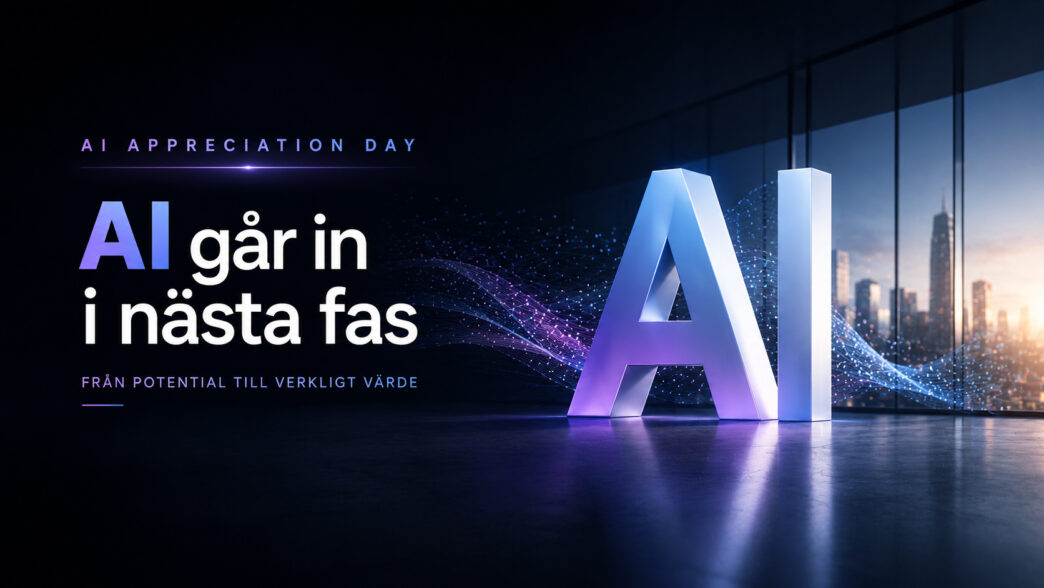
AI has gone from being an experiment to a business-critical technology in just a few years. For many companies, the big challenge is no longer about implementing artificial intelligence, but about being able to demonstrate tangible business results, ensure digital visibility, and at the same time manage a rapidly growing cyber threat. That's the common picture when Pax8, team.blue, and Wiz share their perspectives on the AI Appreciation Day on July 16.
Over the past two years, AI has become a natural part of many organizations' digitalization strategies. Tools for generative AI, automation, and intelligent data analysis are being used in more and more businesses, while investments continue to increase. But as the technology matures, so do companies' priorities.
The question is no longer whether AI works.


The real challenge is how the technology creates measurable business value, how it impacts customer behavior, and how companies can use AI without compromising security, governance, or regulatory compliance.
Small and medium-sized businesses want to see real returns
For small and medium-sized businesses, AI has already become a tool that saves time, automates routine tasks, and streamlines workflows. At the same time, many find the next step significantly more difficult.
Andy Readman, Global AI Platform Lead at Pax8, believes that many companies have invested in AI but still have difficulty translating initial successes into long-term business results.
The challenge is that the AI market is evolving at a rapid pace. New models, services and platforms are being launched continuously, making it difficult for companies without in-house AI specialists to determine which investments are actually creating value.
As AI becomes an integral part of business systems and mission-critical processes, the demands on governance, security and compliance also increase. Companies need to not only choose the right technology, but also be able to measure the return on their AI investments and ensure that solutions are deployed where they have the greatest impact.
For many organizations, the next step will therefore be to move from individual AI initiatives to a well-thought-out strategy where technology, business objectives and governance are developed in parallel.
AI is changing how customers find businesses
At the same time, AI is changing how people search for information and make purchasing decisions.
Traditional search engine optimization is increasingly complemented by AI-powered search services and digital assistants that compile information from multiple sources before the user even visits a website.
Bilal Ahmed, Chief AI & Data Officer at team.blue, describes the development as many companies finding themselves in an “AI fog.” They know that customer behavior is changing, but lack a clear strategy for how to adapt their digital presence.
According to team.blue's latest survey, only 5.5 percent of companies that they feel they have full control over how customers find them online.
This makes your own website more important than ever. Accurate, up-to-date and well-structured information becomes a crucial competitive factor when AI systems retrieve, analyze and present content to users.
For businesses, this means that digital visibility is no longer just about traditional SEO. Content also needs to be optimized for AI-based search features, language models, and new forms of information retrieval that are rapidly transforming the digital marketplace.
AI gives both attackers and defenders new opportunities
Developments are also clearly visible in cybersecurity.
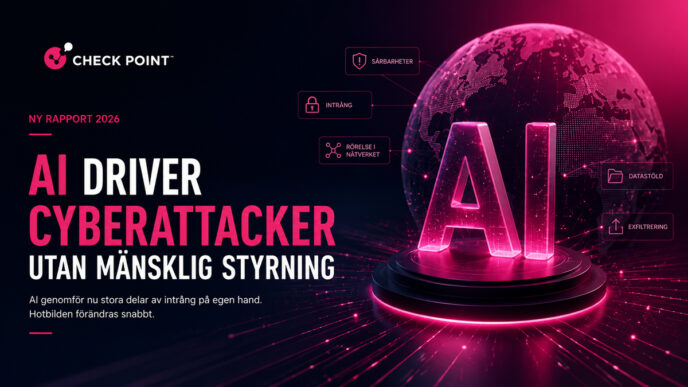
AI enables threat actors to automate attacks, analyze vulnerabilities faster, and develop more advanced methods, while also giving security organizations new opportunities to detect risks before they lead to incidents.
Jesper Rellme, Solutions Engineering Manager at Wiz, highlights that AI's real strength lies in its ability to understand the context between identities, cloud infrastructure, applications, workloads, and data.
When security teams get a comprehensive view of the entire IT environment, they can prioritize the right threats, analyze incidents faster, and make more accurate decisions.
This means that AI is not replacing security experts. On the contrary, the technology becomes a tool that enhances human expertise and makes it possible to protect increasingly complex hybrid and cloud environments.
From AI tools to business strategy
What the three perspectives have in common is that AI has now left the experimental phase.
The next competitive advantage is not about who uses the most AI tools, but about who manages to integrate the technology into the business in a way that creates long-term business value.
It requires high data quality, clear AI governance, strong cybersecurity and a digital presence that works in a world where AI is increasingly becoming the first point of contact between companies and customers.
For Swedish companies, this means a shift from technical implementation to strategic leadership. AI will no longer be an isolated innovation but a central part of business development, customer relations, marketing and information security.
Those organizations that succeed in combining these areas will likely be significantly stronger when AI will continue to reshape both the digital economy and competition in the coming years.









 Swedish
 Danish
 Norwegian
 Finnish
 English
 German
 Dutch
Dutch