




Looking for a Shorter Overview?
AI Summary
Key Moments
Sweden as a lagging AI market
Swedes are less likely to use AI compared to leading countries and have low trust in the technology.National AI strategy as a competitive advantage
Sweden's regulated and transparent approach to AI, together with fossil-free infrastructure, creates opportunities.High concern and low expectation of AI benefits
Swedes are more concerned than globally and fewer believe that AI leads to better products and services.Great lack of AI education in Sweden
61 percent of Swedes lack AI training, which negatively affects usage and trust.AI in Sweden is developing at a slower pace than globally, according to EY's latest report.
Swedes use AI in everyday life but are significantly more skeptical about the technology than the rest of the world. This shows EY's global survey with approximately 18,000 respondents in over 20 countries. In Sweden, 37 percent say they feel comfortable with AI, compared to 49 percent globally. Fewer believe the technology leads to better products and services, and six out of ten lack any training in AI at all. Sweden falls into the study's lowest category, along with countries such as Finland, the UK and Japan.. At the same time, Sweden is one of the few countries that has an AI strategy. The government presented a strategy in February and the goal is for Sweden to be among the top ten countries in the world in AI.
Sweden are categorized as lagging behind when it comes to AI, according to EY's global survey AI Sentiment Index 2026. The 23 markets in the survey are divided into three categories based on residents’ AI usage and attitudes: pioneer markets, transition markets, and laggard markets. Sweden falls into the latter group. This means that Swedes are less likely to use AI, have lower trust in the technology, and are less willing to let AI make decisions on their behalf, compared to countries like India, China, the UAE, and Brazil, which are leading the way.
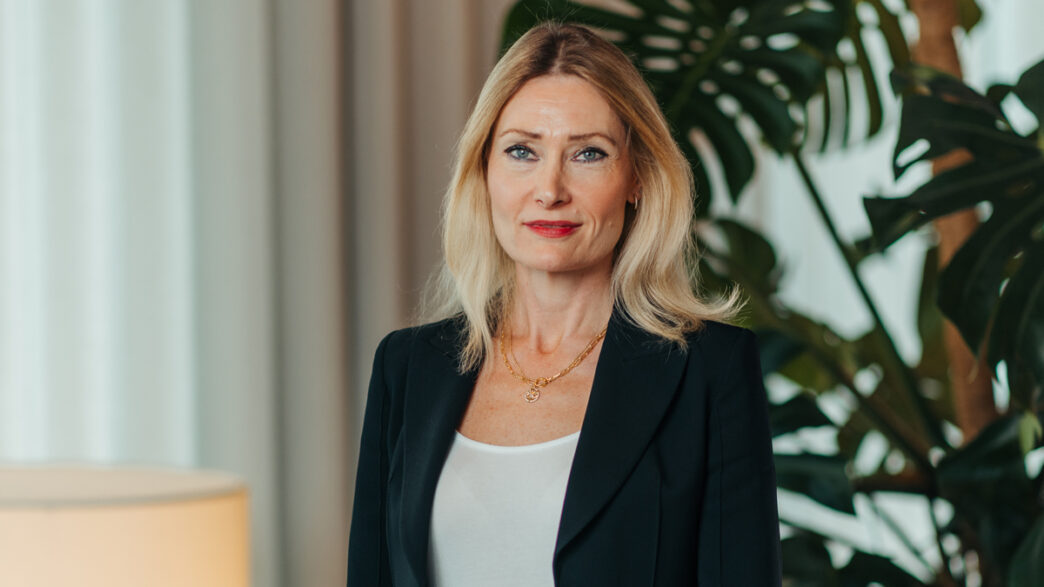
– In the 90s, Sweden gained a digital advantage thanks to the PC reform. Suddenly everyone had a computer at home, learned to use it and built digital skills. Something similar has not happened with AI, and it shows. We think we are keeping up because we have heard about ChatGPT, but real skills are built through daily use, curiosity and education. And that is where we are falling behind, says Charlotte Kvarnstrom, partner at EY and advisor in tech.




The AI strategy and Sweden's regulated view of AI is a competitive advantage
However, Sweden is one of the few countries that has a national AI strategy. The government's ambition is for Sweden to become one of the world's top ten AI countries and a world leader in using AI in public administration.
Sweden's AI strategy, combined with a transparent and regulated view of AI and a rapidly growing, fossil-free infrastructure, gives us a competitive advantage. This despite the fact that use and investment are currently lagging behind. In addition, several important establishments are also underway that strengthen Sweden's position by attracting both expertise and capital, says Charlotta Kvarnström.
Swedes see less benefit from AI and are more worried
According to the survey, expectations of the benefits that AI can create in organizations are lower in Sweden. A third of Swedes (32 percent) believe that AI will lead to better products and services, compared to 42 percent globally. In addition, just over 12 percent believe that they do not expect any benefits at all from organizations using AI, almost twice as many as globally.
At the same time, concerns about AI remain high, both in Sweden and internationally. In Sweden, 60 percent say they are concerned about security breaches in AI systems. Almost as many are concerned about how organizations handle their personal data and the risk of people losing control over decisions made with the help of technology.
Six out of ten Swedes lack training in AI
A possible explanation for the skeptical attitude is the lack of education. Six out of ten Swedes (61 percent) say they have not received any education or training in AI in the past six months, compared to half globally (50 percent).
The proportion who have received more extensive education is also low in Sweden compared to the global average. 14 percent believe they have received more advanced AI training, compared to 23 percent globally. In the countries leading AI development, the so-called pioneer markets, a full 36 percent have received substantial training.
The lower level of knowledge is reflected in how the technology is used. Almost half of Swedes (48 percent) say they have used AI that creates content, compared to 53 percent globally. When it comes to agentic AI, which is a system that can act independently on the user's instructions, 12 percent of Swedes say they have used such tools, compared to 16 percent globally. In pioneer markets, the proportion is 24 percent.
– It is easy to interpret the Swedes' hesitation towards AI as a conscious caution regarding the risks of a completely new technology. But the fact that six out of ten lack basic education about AI tells a different story. Perhaps the concern is not rooted in thoughtfulness, but rather in a lack of education, says Charlotte Kvarnstrom.




















 Swedish
 Danish
 Norwegian
 Finnish
 English
 German
 Dutch
Dutch