



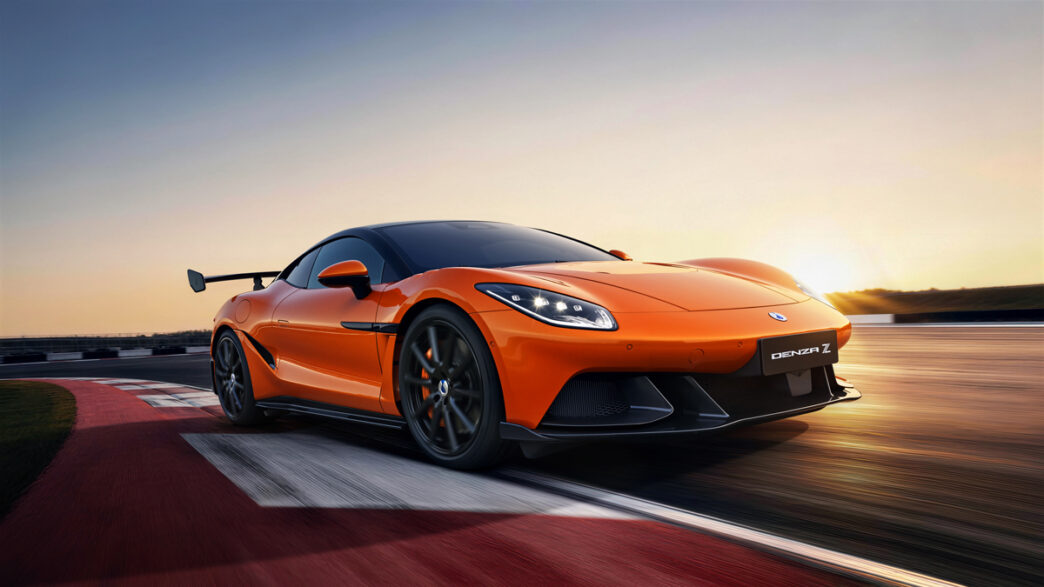
BYD Group's technology-oriented premium brand Denza has unveiled its first supercar, the all-electric Denza Z. The car made its public debut at the Goodwood Festival of Speed and combines a 1,604 hp triple engine configuration with charging technology that fills the battery from 10 to 97 percent in nine minutes.
The Denza Z is the first model to be built on the brand’s new e3 Sports Car Platform, an architecture developed from the ground up for electric drive. The platform is based on a triple motor solution, with one motor driving the front axle and two independently controlled motors driving each rear wheel. The total system output is 1,604 hp (1,180 kW) and 1,240 Nm of torque – regardless of which of the three versions Coupé, Spider or Racing you choose.
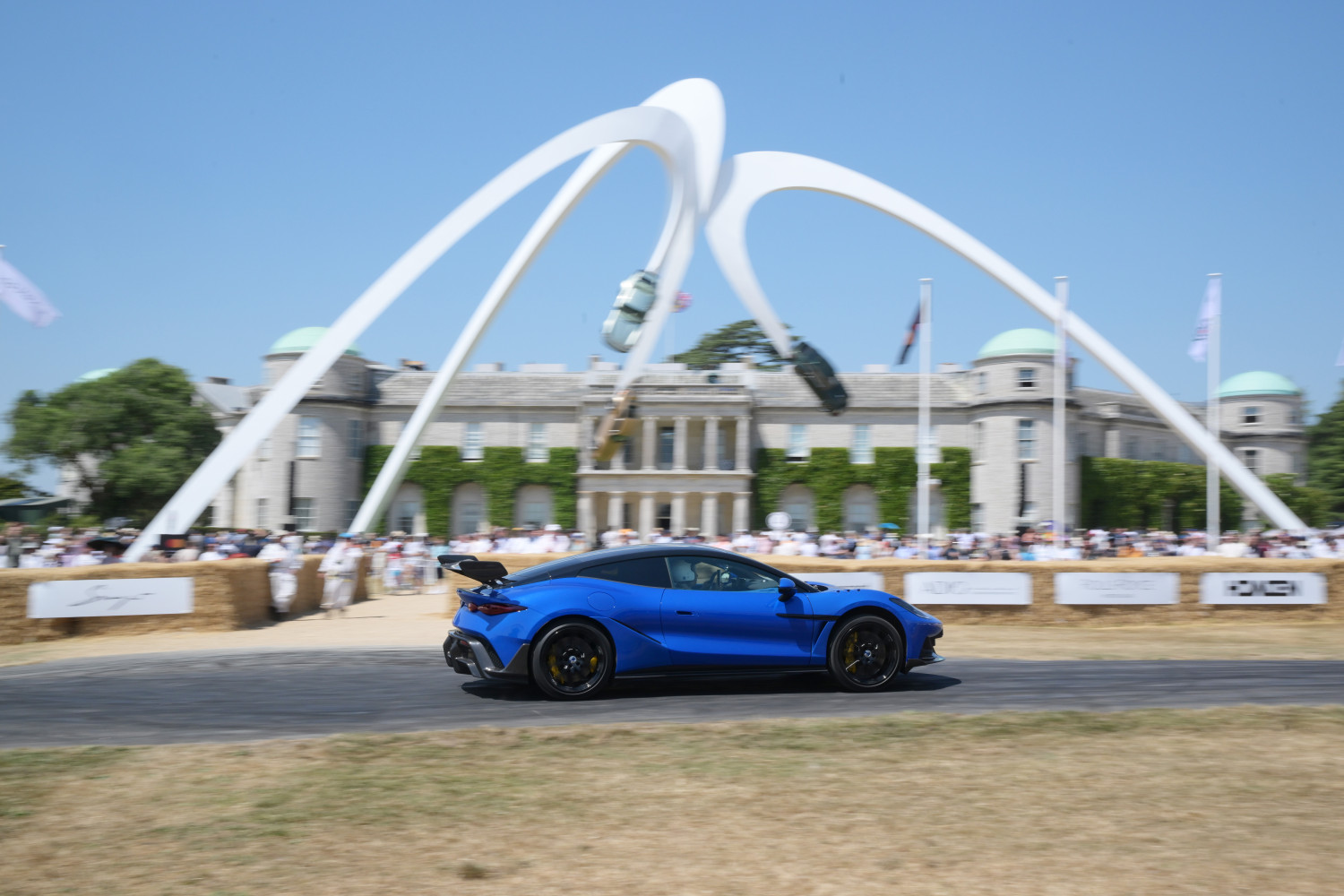
The performance is next. The coupé can do 0–100 km/h in 2.25 seconds with a top speed of 300 km/h. The Racing version, with optional semi-slips, reduces the acceleration time to 1.96 seconds and raises the top speed to 350 km/h. In addition to the three regular variants, Denza has also announced a Special Edition with over 2,000 hp, which will make a record attempt on the Nürburgring Nordschleife later this year. 



Charges as fast as a gas station
Perhaps the most notable technology in the Denza Z is its charging system. The car uses a second-generation 76 kWh Blade battery and supports BYD Group’s new FLASH Charging, which delivers up to 1,500 kW through a single charging port. This means the battery can be charged from 10 to 70 percent in five minutes, or from 10 to 97 percent in nine minutes – times that effectively match a conventional refueling.
The battery is integrated directly into the chassis using BYD's Cell-to-Body (CTB) architecture, where the battery cells are placed in the body itself and the cabin floor acts as the upper cover for the cells. According to BYD, the solution is up to 20 percent more space-efficient than traditional battery packs and contributes to the body's torsional rigidity of over 40,000 Nm per degree.

Steer-by-wire and magnetic suspension
The Denza Z is also a showcase for the Group’s software and chassis technology. The platform uses a completely in-house developed steer-by-wire system, where the mechanical steering linkage is replaced by electronic steering – a solution that improves steering feel, control and efficiency.
The suspension uses for the first time on the platform DiSus-M, an active damping system with magnetorheological fluid that can change viscosity in milliseconds when exposed to a magnetic field. This allows the car's control system to adjust the damping extremely quickly and combine comfort on uneven surfaces with stable body control at high speed. The Coupé and Spider versions have air suspension, while the Racing gets coil springs for a more track-focused setup. All versions have carbon-ceramic brake discs that save around 30 kilograms of unsprung weight.
Digital cockpit with Google built-in
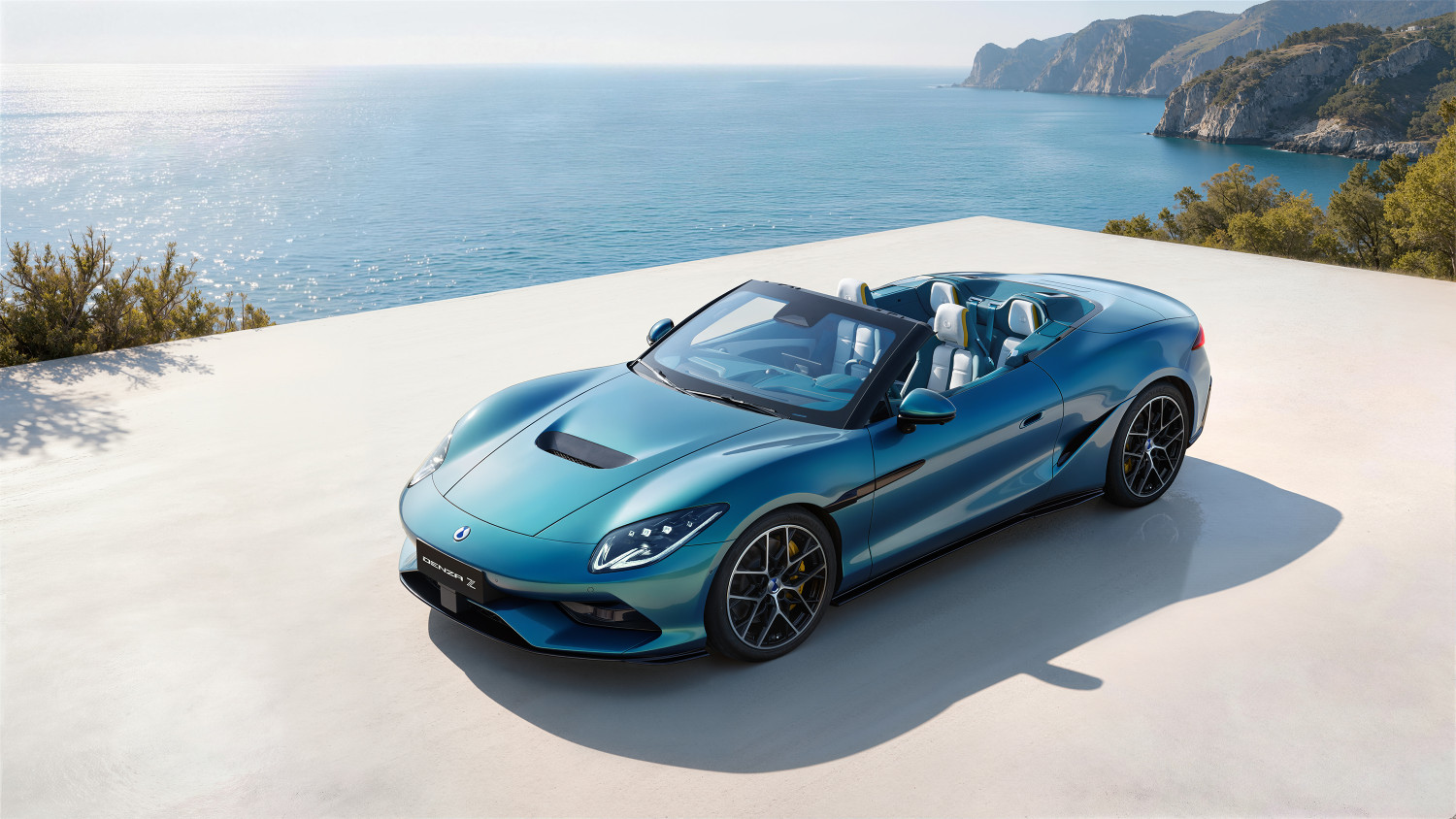
The interior is driver-focused with four seats and a mix of carbon fiber, suede-like fabric and metal details. The digital cockpit consists of an 8.88-inch driver display and a 12.8-inch infotainment screen with built-in Google services. Sound is provided by a Devialet system with twelve speakers in the Coupé and Racing, ten in the Spider, including speakers in the headrests. A dedicated track mode offers telemetry logging and a one-button function for controlled wiring.
The design has been developed under the guidance of BYD:'s global design director Wolfgang Egger according to the design language "Pure Emotion". The Coupé and Spider measure 4,780 mm, while the aerodynamically optimized Racing version is 4,870 mm long. Buyers can choose from ten exterior and interior colors.
Prices and launch
In the UK, prices start at £142,900 for the Coupé, £159,900 for the Spider and £172,900 for the Racing. WLTP range is between approximately 380 km (Racing) and 409 km (Coupé). Orders open in Europe in late summer, with first deliveries planned before the end of the year.
With Denza Z marks BYDThe group clearly aims for the absolute top of the global electric car market – and that the technology from the flagship, from steer-by-wire to FLASH Charging, is intended to trickle down into upcoming European models.
| DENZA Z specifications | |||
| Subject | Compartment | Spider | Contest |
| Dimensions (L/W/H, mm) | 4780/1975/1330 | 4780/1975/1350 | 4870/1990/1350 |
| Wheelbase (mm) | 2780 | ||
| Service weight | 2230 | 2300 | 2250 |
| Air drag coefficient (Cd) | 0,25 | 0,255 | 0,310 |
| Max system power (PS/kW) | 1604/1180 | ||
| Max system torque (Nm) | 1240 | ||
| Front electric motor maximum power (hp/kW) | 680/500 | ||
| Front electric motor maximum torque (Nm) | 440 | ||
| Rear electric motors maximum power (hp/kW) | 462/340 (x2) | ||
| Rear electric motors maximum torque (Nm) | 410 (x2) | ||
| Drive type | AWD | ||
| 0-100 km/h acceleration time (s) | 2,25 | 2.3 | 2,25/1,96 2 |
| 0-200 km/h acceleration time (s) | 6,36 | 6,46 | 6 |
| Top speed (km/h) | 300 | 300/350 2 | |
| Battery capacity (kWh) | 76 | ||
| WLTP combined range (km) | 410 | 400 | 380 |
| Max charging power (AC) | 11kW | ||
| Max charging power (DC) | FLASH charge (10–70 % in 5 minutes, 10–97 % in 9 minutes) | ||
| Battery type | BYD second generation leaf battery (LFP) with Cell-to-Body 2.0 (CTB 2.0) technology | ||
| Luggage space (litres) | 250 | 131-176 | 250 |
| Front/rear suspension | Double wishbone/five-link, Intelligent dimming of DiSuS-M, air suspension | Double wishbone/five-link, Intelligent dimming of DiSuS-M, coil springs | |
| Front/rear brakes | 6-piston with carbon ceramic discs/ 4-piston with carbon ceramic discs | ||
| Wheel size (inches) | 20 | 20 | 21 |












 Swedish
  Danish
  Norwegian
  Finnish
  English
  German
  Dutch
Dutch