



Looking for a Shorter Overview?
AI Summary
Key Moments
AI skapar fler jobb än det ersätter
77 procent av cheferna uppger att AI lett till ökad anställning jämfört med 46 procent som sett jobbminskning.Integrering av AI i kärnverksamheten
Organisationer som strukturerat integrerar AI i verksamheten ser större affärsvärde och avkastning.Mognadsgrad påverkar AI:s effekter
Företag med avancerad AI-implementering upplever större positiva arbetsmarknadseffekter än nybörjare.Behov av datamognad och styrning
AI-implementering måste ske med stark datainfrastruktur och regelefterlevnad, särskilt enligt EU AI Act.Stockholm – March 12, 2026 – AI Data Cloud company Snowflake TechTarget, together with the research firm Omdia by Informa, presents the report “The ROI of Gen AI and Agents.” The study is based on responses from 2,050 business and IT managers in European and global organizations and provides a new picture of how artificial intelligence is impacting the labor market.
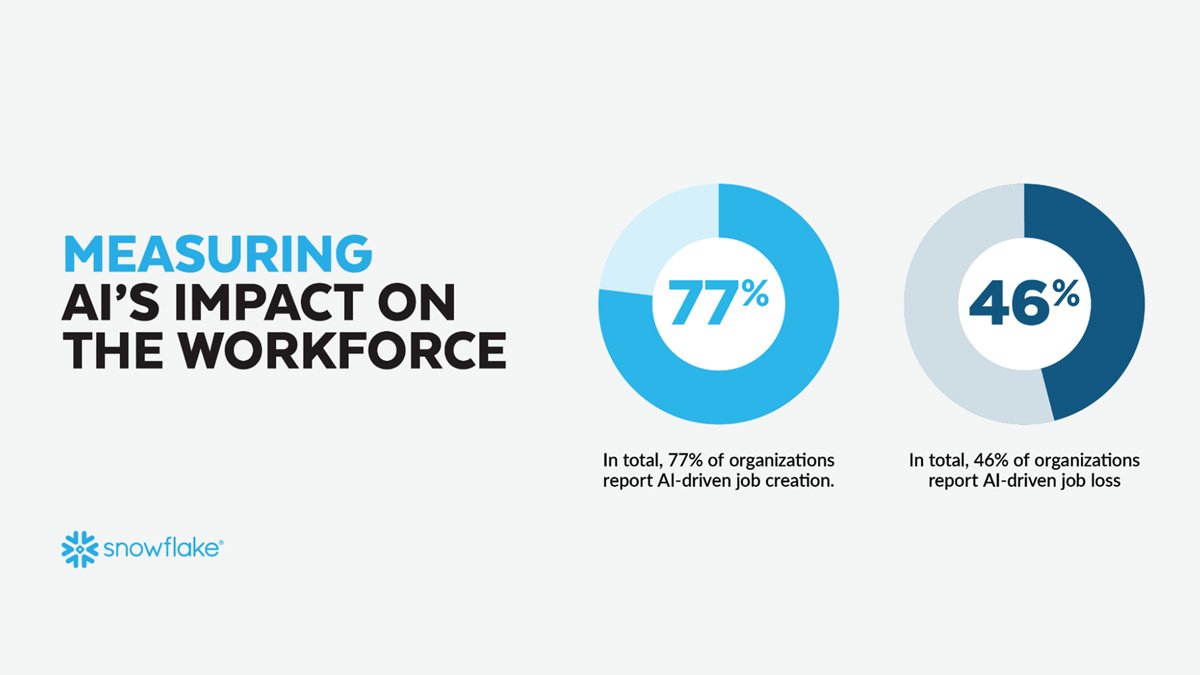
The results show that AI's impact on the workforce is more nuanced than many headlines suggest. In the survey, 77 percent of respondents said AI has led to more jobs, compared to 46 percent who report job losses. Among those experiencing both effects, 69 percent say AI has had a positive impact on jobs overall.
The study also shows that organizations that are most successful with AI are those that integrate the technology into their core business and not just use it for experimental projects. Companies that work structured with data platforms and AI strategies also see greater business value and better results from their investments. 




AI must be integrated into operations
As European organizations continue to push AI adoption while navigating regulatory requirements such as the EU AI Act, the highest returns will not come from simply experimenting, says Dayne Turbitt, Senior Vice President for EMEA at Snowflake.
He believes that AI must be integrated into the core processes of the business while strengthening data maturity, governance models and security routines to meet regional compliance requirements.
The European job market will increasingly be shaped by organizations that can combine AI ambition with stable data infrastructure and strong governance, Turbitt said. Companies that succeed in transforming technology into business value will create a more sustainable competitive advantage across multiple markets.
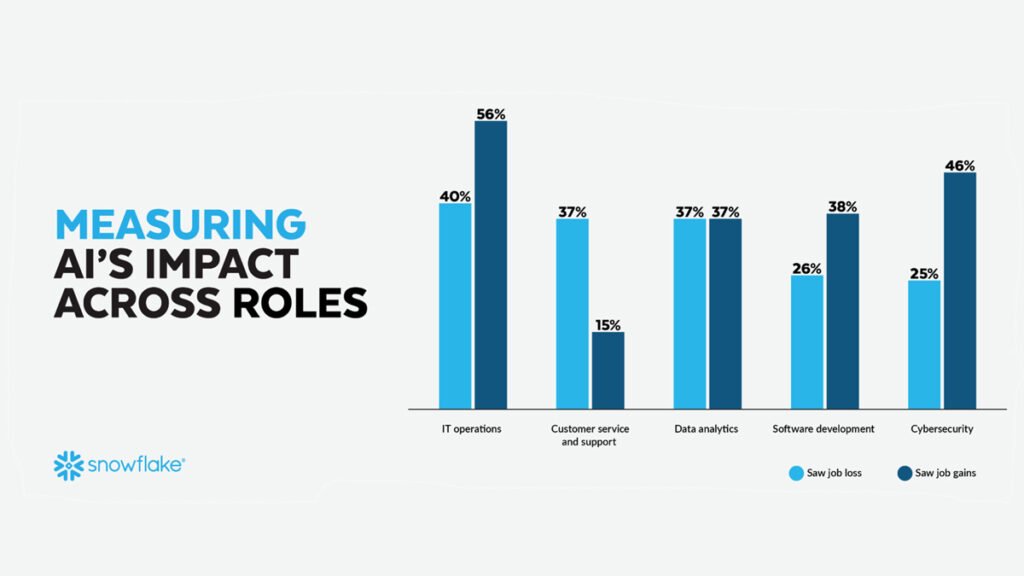
Maturity determines the impact of AI
The report also shows that the maturity of the organization plays a major role. Among companies that have already implemented AI across multiple business areas, 75 percent say the technology has had a positive impact on their workforce. Among organizations that are at an earlier stage of AI implementation, the corresponding figure is 56 percent.
This suggests that the effects of AI often change as the technology becomes more integrated into the organization's processes and decision-making systems.
For many companies, this means that AI is no longer considered just a tool for automation, but as a central part of the digital business strategy of the future.
The report also highlights that organisations that invest strategically in AI, skills development and data infrastructure have the greatest opportunity to benefit from the technology. For European companies, this means that AI is increasingly becoming a driver of innovation, new roles and changed ways of working rather than a mere replacement of existing jobs.
















 Swedish
  Danish
  Norwegian
  Finnish
  English
  German
  Dutch
Dutch