



Looking for a Shorter Overview?
AI Summary
Key Moments
Största riskregionen Skåne
Skåne har högst överrepresentation av riskfyllda bolag med ett index på 154.Utbildningsstöd mest riskutsatt bransch
Utbildningsstöd branschen har ett riskindex på 244, högst bland sektorerna.Fastighetsbranschen har lägst risk
Trots tidigare diskussioner visar fastighetsbolag lägst riskindex, endast 15.Hög andel juridiska förekomster
66,4% av de flaggade bolagen har företrädare med registrerade juridiska brott.A new report from Roaring maps out where Sweden's risky and rogue companies are located and how they are distributed across regions and industries. The report shows clear geographic and industry-specific patterns and highlights how criminal actors exploit companies to conduct financial crime.
The background is serious. A report from the Expert Group for Studies in Public Economics (ESO) estimates that the criminal economy in Sweden has a turnover of around SEK 352 billion per year and generates criminal profits of around SEK 185 billion. At the same time, around 80 percent of EU criminal networks use companies as tools to carry out crimes.

Risky companies can take many forms. For example, they can be companies without actual operations that still retain F-tax, VAT registration and creditworthiness. These companies can then be used by criminal actors to buy into established structures and carry out economic crime. 



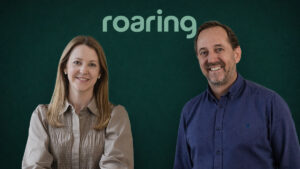
Roaring has analyzed over a thousand flagged companies
In the report, Roaring has reviewed Swedish limited liability companies and analyzed changes in board compositions, SNI codes and company addresses, among other things. By combining several risk indicators, the company has identified 1,005 companies that are classified as risky.
The analysis is based on an index that shows whether a county or industry has a higher or lower proportion of risky companies compared to its share of Sweden's total limited liability companies.
Skåne is identified as the highest risk region
One of the report's clearest conclusions is that Skåne now appears to be Sweden's most risk-exposed region when it comes to the presence of risky companies.
With an index of 154, the county has a significant overrepresentation compared to other parts of the country and is identified as the primary risk region in this year's survey.
Educational support most vulnerable industry
At the industry level, the educational support category tops the list of sectors with the highest risk concentration.
The industry has an index of 244, making it the most risk-exposed sector in Roaring's 2025 measurement.
The real estate industry shows the strongest resilience
At the same time, there are industries that stand out in the opposite direction. Real estate companies have the lowest risk index in the report, with a value of only 15.
The result is particularly noteworthy as the real estate sector is often mentioned in discussions about financial crime and money laundering, yet according to Roaring's analysis, the sector shows the strongest resilience among the industries examined.
Legal occurrences common among flagged companies
The report also shows that a large proportion of the identified companies have connections to people with documented legal entities.
Of the 1,005 flagged companies, 667 companies, corresponding to 66.4 percent, have representatives with registered legal entities.
Among the most common crime categories are:
- Money laundering
- Tax fraud
- Fraud
- Accounting violations
- Drug crimes
- Abuse
Many companies lack turnover
The report also shows that a large proportion of the identified companies have limited or no economic activity.
Of the 1,005 companies:
- 536 companies report a turnover of zero kronor.
- 149 companies are in ongoing or completed bankruptcy or liquidation.
- 29 companies report a turnover exceeding SEK 6 million.
According to Roaring The group with zero turnover includes both active companies and companies that are in various forms of winding-up processes such as mergers, liquidations and bankruptcies.
Important knowledge for companies and authorities
The report provides a unique insight into how risky companies are distributed across Sweden and which sectors are most vulnerable to rogue actors.
For companies, authorities and organizations working with risk management, regulatory compliance and supplier controls, the results can serve as an important tool for identifying where the risks are greatest and which warning signs should be noted at an early stage.















 Swedish
  Danish
  Norwegian
  Finnish
  English
  German
  Dutch
Dutch