




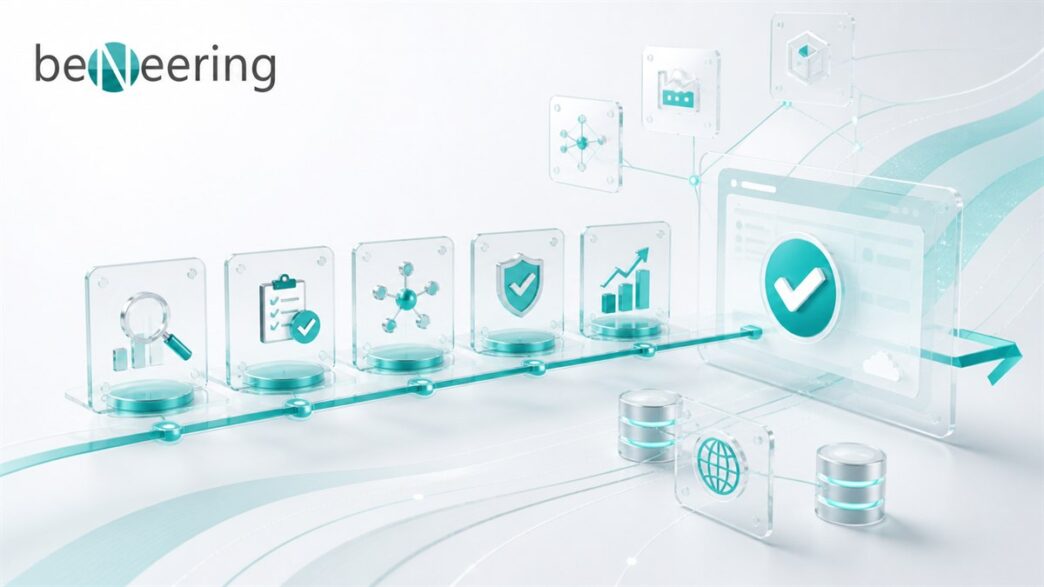
A successful procurement platform launch requires much more than the right software. The decision has been made, the budget approved and the new procurement tool chosen. In practice, this is the phase that begins and determines the true value of the investment: the planning for deployment and rollout.
A well-crafted launch plan is about much more than managing milestones, test scripts, and rollout waves. It must align business requirements, purchasing channels, ERP data, and roles so that the new solution becomes the natural and reliable path into daily work.
Organizations that consider digitalization of purchasing as a pure software installation risks only digitizing already inefficient processes. For a deployment to lead to real business change, purchasing and IT managers need to consider five critical success factors from the start.



1. Start with the problems – not with the software features
Many project groups start primarily from the tool's feature list. However, the most important question is not which modules can be configured, but where the concrete problems lie in today's purchasing work.
For example, buyers may find it difficult to find the right purchasing path, understand applicable regulations, or track the status of an order. At the same time, the operational purchasing function loses valuable time on incomplete free text requests, manual corrections, and recurring questions.
Sustainable preparation therefore requires early collaboration between operations, purchasing, IT and finance. The identified friction points need to be converted into measurable goals. This could involve reducing free text requests for needs that are already covered by negotiated products or limiting so-called maverick buying, where purchases are made outside of established processes and rules.
These process goals form the basis for a credible decision-making basis. The calculation should not be limited to license and implementation costs. Data cleansing, development and monitoring of integrations, operation of middleware, and training also affect the total cost of ownership and must be included from the start.
2. Structure purchasing channels before digitizing them
Modern solutions for intake and orchestration should offer the requester a common entry point and handle the complexity in the background. This only works if the purchasing organization has first defined its processes and purchasing paths.
If clear purchasing flows are missing, even advanced software can do no more than register requests. To control and automate processes Before the rollout, it needs to be determined which needs will be handled via catalogs, marketplaces, framework agreements, own warehouses or prioritized suppliers.
The system also needs predefined thresholds, automatic approval rules, and structured forms for the unavoidable free-text needs. The more standard paths that have been negotiated and defined in advance, the greater the proportion of purchases the business can handle through self-service.
Free text requests will not disappear completely. Used correctly, they can instead become a strategic basis. By analyzing recurring patterns, the purchasing function can identify which categories should be prioritized for new framework agreements or catalog connections.
3. Make ERP integration the backbone of the solution
Digital purchasing projects quickly run into problems if the process breaks at the border with The ERP system. The central ERP system is normally the company's reliable source for master data, cost centers, budgets, authorizations and accounting rules.
The purchasing platform doesn't just need to retrieve and use this data. It must support a seamless flow all the way from the need and purchase request to the order, delivery or service registration, and invoice.
When companies rely on delayed data copies via complex middleware, parallel data environments are easily created. If a supplier has been blocked or a budget has been used up in the ERP system, but the information has not yet reached the purchasing solution, the user interface is working with outdated data.
Stable processes from start to finish, including exceptions such as supplier holdups and budget overruns, are therefore more important than a large number of functions that rely on asynchronous data transfer.
An example of an ERP-like architecture is BeNeering's Digital Procurement Platform. The platform uses SAP data directly and in real time during the purchasing process instead of building a parallel data environment. This allows both the processes and the associated AI functions to work with current ERP data.
4. Adapt the scope to the maturity of the organization
The choice between a comprehensive big bang launch and a gradual start with a minimum viable product, MVP, should not be based on gut feeling. The decisive factor is how mature and structured the purchasing organization is.
Companies that already have clear sourcing channels and well-developed category strategies can often implement the solution directly across multiple divisions, facilities or countries. Organizations that still need to structure their sourcing paths reduce risk by starting with a learning MVP approach.
This can be done in two ways. Either a smaller number of highly standardized categories are activated for the entire organization, or a selected user group, such as a facility or department, is given access to the solution for all needs.
The latter option provides users with a consistent experience without having to switch between multiple systems. Regardless of the implementation model, the long-term goal should be the same: a single, universal entry point for all of an organization's purchasing needs.
5. Take the users' working day into account when planning change efforts
Employees rarely start using a new solution just because it has been made technically available or presented in a message from management. When first encountering the tool, the user wants to know how it will concretely simplify their workday.
The answer cannot be limited to abstract compliance rules. The solution needs to offer clear benefits in the form of time savings, intuitive guidance, low training requirements and full visibility into the status of the process.
Change management should therefore not be treated as a pre-launch communication effort. When representatives from the business are allowed to test prototypes and real-world work scenarios already during the design phase, their practical insights can be built into the solution.
Infrequent users in particular quickly demonstrate whether concepts, forms, and process steps can be understood without in-depth knowledge of purchasing. Early involvement makes users co-creators of the solution. This can both increase usage from day one and reduce costly corrections after deployment.
Go-live is the beginning of the real ordeal
A technically completed implementation is not in itself proof of success. The value of the purchasing platform only becomes visible in daily work: when standard requirements can be handled without detours, the proportion of free text requests is reduced, ERP data flows reliably and the purchasing organization is relieved of recurring routine tasks.
Organizations that set clear goals, structure purchasing channels, ensure ERP integration, and involve users early create a solid foundation for results. Equally important is establishing responsibilities for the ongoing management and further development of channels, rules, and user guidance.
It is only in the ongoing operations that it becomes clear whether the digitalization of purchasing provides lasting relief or just creates another digital detour.












 Swedish
 Danish
 Norwegian
 Finnish
 English
 German
 Dutch
Dutch