


Looking for a Shorter Overview?
AI Summary
Key Moments
The difference between ability and authority
Just because an AI model can suggest actions does not mean it has the right to implement them.Why AI gets stuck in the pilot phase
Pilot projects often work thanks to human supervision, while production requires strict control and mandate.Guardrails are inadequate
Technical safeguards can verify formats but not make decisions about whether the AI's actions should be allowed.Empowerment as the foundation for scalable AI
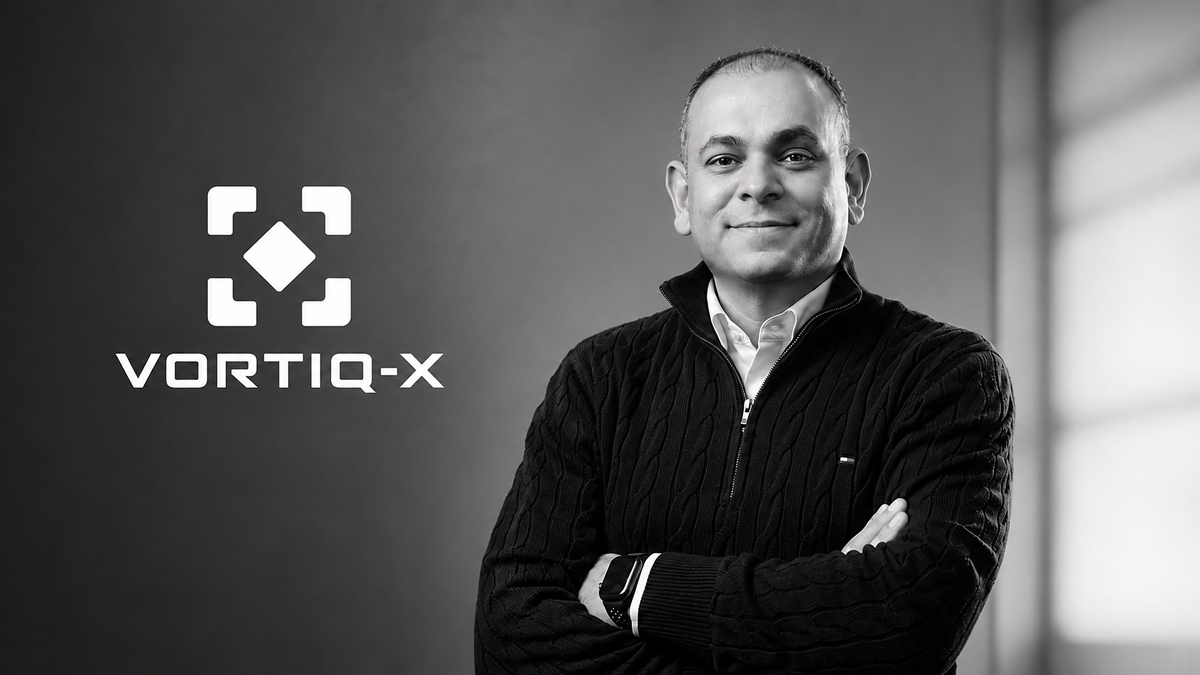
Properly constructed mandates are necessary for AI to scale safely and be managed within organizations.The AI industry is competing for bigger models, more GPUs, more advanced agents, and faster infrastructure. But according to Raymond Steen, founder and CTO of VORTIQ-X, the real bottleneck lies elsewhere.
The crucial question is no longer just what AI can suggest. The question is who has the authority to let AI act.
In this interview with IT-Branschen, he describes Raymond Steen why enterprise AI still stuck in the pilot phase, why guardrails are not enough on their own and why the future AI infrastructure must be able to distinguish between intelligence and authority.


Editorial note: IT-Branschen has reviewed the VORTIQ-X presentation and test material. The interview is published as editorial content and the answers are reproduced in Raymond Steen's own words.
From engineer to industry challenger
IT Industry: Almost the entire AI industry is focused on building increasingly powerful models. You chose a different path. Why?
Raymond Steen:
Because the industry is optimizing the wrong variable.
Everyone is trying to win the race by making AI very creative in their proposals. Almost no one answers the question that determines whether the technology can actually be put into operation safely: who has the authority to let it act?
A model can be ten times better at suggesting a payment, a disclosure of data, or a change in infrastructure, and still not have a single percent greater right to implement any of it.
Capability and authority are two different issues. I chose the latter. It turned out to be exactly the issue that the entire market ultimately faces, and we ensured that each organization can create and maintain the right mandate.
IT Industry: Was there a moment when you realized that the industry was solving the wrong problem?
Raymond Steen:
Yes. June 2025.
I worked my way through some ethical dilemmas with a chatbot, specifically the tram problem in six different variations. It didn't refuse. It answered. It said that one life was worth more than another and put a green check next to the answer.
I argued with it for an hour and finally it stopped responding. Then I found a transcript of the same question from another session, and there it had been fully answered.
So I asked it bluntly: if my daughter asks this question, will she get the same refusal?
It assured me that the same limit applied globally. It didn't. I had brought about the refusal by arguing it. She wouldn't sit down and argue.
That was the moment.
The problem wasn't that the machine was dangerous, but that the boundary shifted depending on who was pushing it. If a boundary can be talked away, it's not a boundary. It's a mood.
I realized that the entire industry was building capability on top of exactly this.
AI that can act requires a new layer of control
According to Raymond Steen, the problem is not just about individual chatbots or individual responses. It's about what happens when AI starts to connect to real systems, real data, and real consequences.
Raymond Steen:
Ever since then it has been the same problem in different clothes.
We see AI that can move money, clear a journal, or set a machine in motion, combined with a state layer that gives way.
I built VORTIQ-X so that the decision about whether something is allowed to happen is made in a place where the model cannot argue against it. It can also be checked afterwards by someone who also doesn't trust me.
IT Industry: Describe VORTIQ-X to a CEO in one sentence.
Raymond Steen:
VORTIQ-X decides whether an AI suggestion can become reality and leaves behind evidence that your own employees can verify offline, without calling us or relying on an active VORTIQ-X service.
IT Industry: What assumptions about AI did you once believe in and have since reconsidered?
Raymond Steen:
I assumed that better models and better guardrails would solve most of the problems of introducing AI into organizations.
They don't.
They improve the proposals and reduce known risk classes, but none of them create a clear mandate for which anyone can be held accountable.
Why many AI projects get stuck in the pilot phase
Hundreds of billions have been invested in models, cloud infrastructure, and AI platforms. Yet many AI initiatives in larger organizations struggle to move from pilot projects to real production.
According to Raymond Steen, this is because pilot projects can work despite uncertainty. Production requires something different.
IT Industry: Hundreds of billions have been invested in models and infrastructure, but many AI initiatives in organizations are stuck in the pilot phase. Why?
Raymond Steen:
Because a pilot project can survive because a human being can capture the uncertainty. Production can't do that.
In production, the questions are merciless.
Exactly what data is allowed to go in? What is the agent allowed to do? Can the receiving system refuse? What happens if the permission is reused? Can we roll back before a final action is taken? Can we prove a refusal as clearly as an approval?
The organizations that can answer the questions will deploy. Those that can't will stay in the pilot phase.
What is missing is not more intelligence. It is a controlled transaction between AI intent and operational consequence.
We added something that everyone we discussed it with thought was impossible. We give organizations tools to show what AI didn't do and what it refused to do.
This is no longer a black box. It is something that will even change how the insurance industry handles AI incidents.
Trust in AI doesn't mean the model is always right
In many organizations, AI trust is still tied to the quality of the models. Better models are assumed to make better decisions. Raymond Steen believes that this is a dangerous simplification.
The IT industry: Everyone is talking about AGI, reasoning models and autonomous agents. You emphasize trust and empowerment. Why is that the real challenge?
Raymond Steen:
Because greater ability increases the value of the right mandate. It does not decrease it.
There is a misconception about this issue. Trust in AI in organizations should never mean believing that the model will not be wrong.
This should mean that a flawed, manipulated or overly far-reaching proposal can never gain authority from the start.
When the boundary is properly constructed, you don't need perfect model behavior. You need an authority that never negotiates.
That's what makes AI scalable.
CIOs need to stop seeing the model as the hardest part
For many CIOs and IT leaders, model selection remains a central question. Should the organization choose OpenAI, Anthropic, Google, Microsoft, on-premises models, or open models?
Raymond Steen believes that the issue is important, but not the most difficult.
IT Industry: What is the biggest misconception that CIOs still have about AI in organizations?
Raymond Steen:
They believe that the difficult part is choosing a model.
The model is actually the most interchangeable part of the technology stack, and we showed that in the cleanest way possible.
The model needs authority for production launch, reconciliation throughout the lifecycle, and strict governance.
You need a model that meets the requirements and a separate layer of authority. Once a CIO sees that, the architecture conversation becomes very easy.
Intelligence and competence are not the same thing
A central part of Raymond Steen's reasoning is the distinction between intelligence and authority. Intelligence is about figuring out what is likely, useful, or optimal. Authority is about what the organization actually allows.
IT-Branschen: You say that intelligence and power are completely different things. Why is that distinction so important?
Raymond Steen:
Intelligence calculates what is probable, useful, or optimal.
Authorization is the organization's current decision about what it allows, according to a specific mandate, at this moment, for this recipient system, and with this recovery mode.
A model can correctly identify the most profitable transaction, the fastest response, or the most likely threat and still lack permission to use the money, isolate the system, or set the machine in motion.
Treating the model's security level as a state is the most dangerous shortcut in agent-based AI.
This is the shortcut that large parts of the industry are currently taking without realizing it.
Guardrails alone are not enough
Guardrails have become one of the most used words in AI security. But according to Raymond Steen, they are not enough to handle AI systems that operate across multiple systems, processes, and mission-critical environments.
IT Industry: Many companies believe that stricter guardrails are the solution. Why aren't guardrails enough on their own?
Raymond Steen:
Because guardrails only see surfaces as a prompt, a response, or a tool call.
Consequences span multiple systems. The same technically valid API call can close a support case, terminate a policy, or stop a critical service.
A guardrail can tell you that the call is properly formatted. It cannot determine whether it should be executed.
Guardrails provide support, but authority is decisive.
You need both, and the organizations that successfully deploy are those that understood the difference early on.
Next part
In the next part of the interview, Raymond Steen goes deeper into the AI market, NVIDIA, Microsoft, OpenAI, Anthropic, Google, Authorized Demand and why VORTIQ-X believes that verifiable authorization can become a new foundation for enterprise AI.












 Swedish
 Danish
 Norwegian
 Finnish
 English
 German
 Dutch
Dutch