




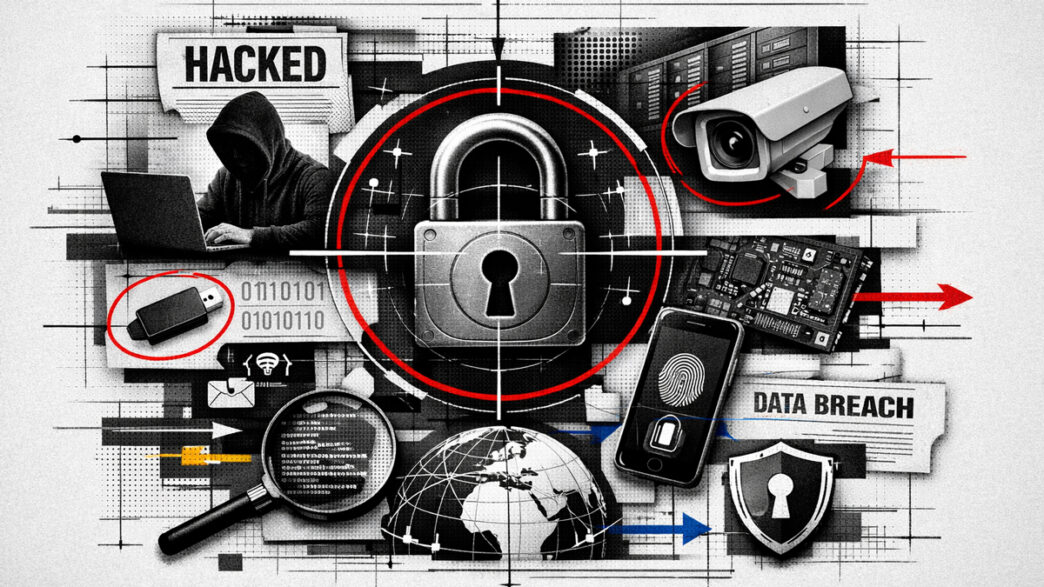
Cybersecurity is a critical factor in today's threat landscape. Organizations are increasingly investing in security solutions, but many breaches still start with a simple mistake.
As the threat landscape evolves, one question is increasingly being raised in security discussions: how permissions are assigned and managed in the organization's IT environment.
Developments in the Nordic region reinforce the need for strict access control
Several reports and analyses in cybersecurity indicate that the Nordic market is facing a rapidly growing threat landscape. Organizations in Sweden, Norway, Denmark and Finland are digitizing at a rapid pace, while the attack surface is increasing in line with more connected systems and cloud-based services.


A recurring factor in incidents is the combination of user interaction and elevated privileges. In many cases, these are not advanced attacks, but rather attackers exploiting existing access rights after an initial breach.
According to several industry players in identity security and access management, this is one of the most critical security challenges for Nordic companies right now. The focus is therefore shifting from just preventative protection to also limiting the consequences when something happens.
Structure rather than behavior in focus
Traditionally, much of the cybersecurity work has focused on educating users and reducing the risk of incorrect decisions. At the same time, incident analyses show that technical conditions often play an equally crucial role.
When users have extensive rights in their systems, the consequences of each individual action increase. This means that a seemingly insignificant moment can have a greater effect than intended.
Several actors in the security field, including Admin By Request, points out that this is a recurring factor in many types of intrusions.
Limited rights reduce the risk of spread
A recurring argument in the industry is that restricting permissions can act as a brake on the course of events. If a user lacks the ability to install or change system components, it also reduces the opportunity for malicious code to gain a foothold.
This does not mean that incidents can be completely avoided, but that their extent can in many cases be reduced.
In practice, it is about creating an environment where individual mistakes do not automatically lead to full system impact.
Changed view of the user role
Developments in phishing and social engineering have made it more difficult to fully rely on a user's ability to identify threats. Attacks are becoming increasingly sophisticated and customized, allowing even experienced users to be misled.
This has led to a shift in the approach to cybersecurity, with a greater focus on designing systems that are resilient even when errors occur.
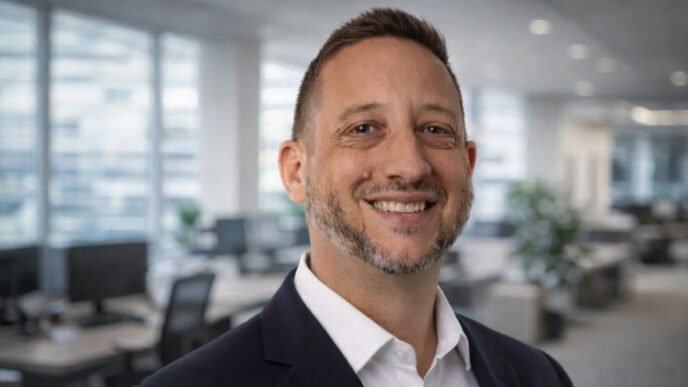
“It is reasonable to assume that someone will make a wrong decision at some point. The question is then what the consequences will be,” says Jim Sadejeff, Head of Sales in Sweden.
Controlled access principles
A model that is gaining increasing impact is working with dynamic and needs-based access, where users only receive extended rights for limited periods.
This type of solution means that:
- permissions are activated when needed
- access can be time-limited
- activities can be followed up and logged
The aim is to reduce permanent exposure without affecting the efficiency of the operation.

From prevention to consequence control
A central part of modern cybersecurity is combining preventive measures with mechanisms that limit the consequences once something happens.
This means that the security strategy is not only about stopping attacks, but also about limiting their reach.
“Security cannot be built solely on the assumption that no mistakes will happen. Systems need to be designed to handle them,” says Sadejeff.
Growing focus in Swedish organizations
The issue of access control has recently received increased attention in both private and public organizations in Sweden. As regulations and security requirements become stricter, access control is becoming an increasingly important part of overall security work.
It's basically about reducing the attack surface and creating better conditions for handling incidents when they occur.
About Admin By Request
The company develops solutions for managing privileged access, with a focus on giving organizations control over administrative rights and visibility into how they are used.
By working with time-based and on-demand access, organizations can reduce risk exposure and strengthen their cybersecurity strategy.
External link: Read more at Admin By Request.
This article is based on a compilation of industry insights, publicly available information, and comments from cybersecurity stakeholders. The content is editorially edited and aims to provide a broader analysis of developments in access control and cybersecurity.









 Swedish
 Danish
 Norwegian
 Finnish
 English
 German
 Dutch
Dutch