




The security landscape in 2026 is characterized by fast AI development new threat scenarios and a changed way for organizations to build, protect and govern their digital environments. AI is evolving faster than any other technology and in 2026 the pace will not slow down but rather accelerate, which places completely new demands on security work.
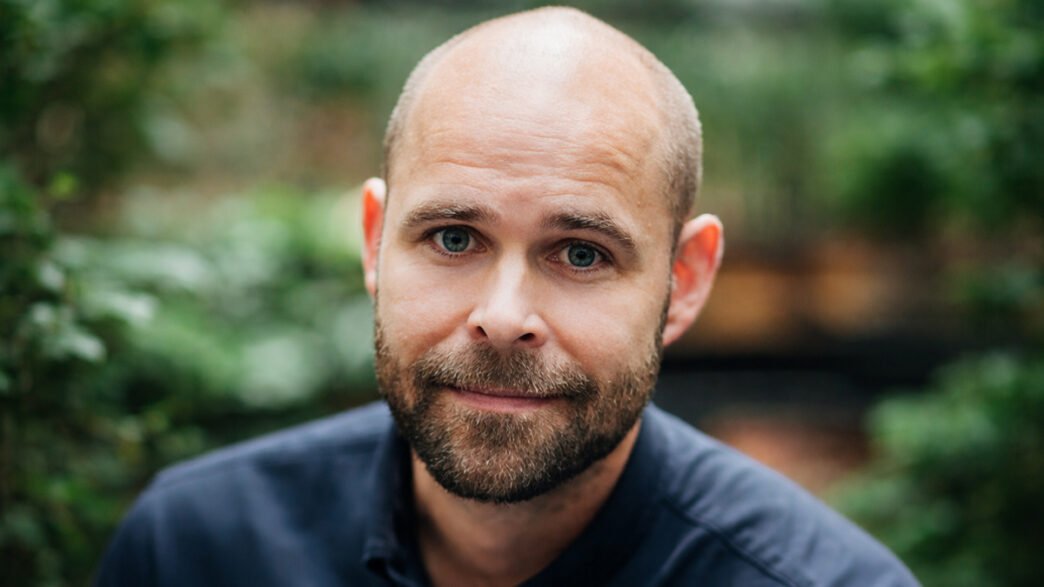
The new year marks a clear shift towards deeper understanding, higher levels of automation, and more powerful AI-driven decision support. According to Love Nelson, Regional Director Nordics at Wiz, five central areas have been identified that show how organizations in Sweden should think about security in the AI era.
Development cycles go from hours to minutes – safety must keep up
AI förändrar takten i mjukvaruutveckling på ett sätt ingen teknik har gjort tidigare. Det som tidigare tog veckor sker nu på timmar, och snart bara på minuter. Love menar att alla organisationer, från startups till banker och regeringar, tävlar för att anpassa sig. Men traditionella säkerhetsprocesser och manuella kontroller kämpar för att hänga med. A recent study by Wiz shows that 31 percent of companies consider AI security expertise to be their biggest shortcoming. By 2026, the focus for Swedish organizations will shift towards scalable, automated security that can keep up with AI-driven developments.



AI agents become full-fledged security personnel
Modern security requires visibility into the entire technology stack – from code and CI/CD pipelines to infrastructure, identities, user behaviors and runtime environments. In an AI-driven reality, it is therefore not enough to simply scan environments: we must also understand them. Here, purpose-built AI agents play a central role in transforming insights into action in both investigation and response. These agents work side by side with developers, DevOps, AppSec and SecOps – not as simple automations, but as active colleagues who identify patterns, analyze risks and warn of incorrect implementations before they reach production.
The agents, created with specific purposes in mind, gather context, evaluate evidence, and deliver clear decisions with both confidence and justification. This could be stopping a new feature that inadvertently reads from a bucket of sensitive data, or determining that a reported vulnerability is irrelevant because the component is not running at runtime. In 2026, AI will take the step from assistant to full-fledged team member.
Developers become part of the defense
With development moving faster than ever, the security responsibility cannot lie with just one team. Currently, over half of the Wiz users outside the security function, and by 2026, Love predicts this trend will increase significantly, with every developer playing a role in protecting what they build. As technology changes and becomes more accessible, security must be democratized and become a shared responsibility across all teams, from development to production. Security is not something that happens after the fact – it’s about building horizontally, with security features built into every step of the development process.
Trust becomes the most valuable currency
As AI takes on a greater role in decision-making, the demands for transparency and understanding increase. Organizations need to understand why AI is recommending a certain action or classifying something as a risk. Love emphasizes that trust is built through context, which Wiz illustrates via a graph model that visualizes how resources, data flows, dependencies, and risks are connected. By offering clear explanations behind security decisions, trust increases – both between users and systems, between development and security, and up to management level.
Create context and visibility at the speed of AI
Context is already crucial to cloud security, but in 2026 it will be the difference between signal and noise. A study from Wiz shows that 25 percent of organizations don’t know what AI services are running in their environments. That lack of visibility creates blind spots and delays action. The challenge isn’t to build the most advanced The AI model. It's about ensuring that the model has the right foundation: full-stack visibility, clean data, and the context required to understand how risks actually affect your environment. That's how teams can filter out false positives, prioritize what matters most, and act with confidence.
2026 will be the year that organizations create new ways to build faster, safer, and smarter. With the right tools, knowledge, and context, organizations can continue to keep pace with AI development in order to be able to utilize all the advantages of technology – and defend their environment at the same pace as the threats change.
Read more about Wiz here.










 Swedish
 Danish
 Norwegian
 Finnish
 English
 German
 Dutch
Dutch