



Looking for a Shorter Overview?
AI Summary
Key Moments
Organizational silos and collaboration difficulties
82 percent of companies feel that a lack of collaboration between operations and IT is delaying AI projects.Shadow IT and risks with your own AI tools
79 percent see that employees are adopting AI tools without IT knowledge, which poses data leakage risks.The importance of data sovereignty
80 percent prioritize the location of data storage for security and privacy reasons in their IT infrastructure.Containers as an IT infrastructure standard
85 percent believe that AI is driving the use of containers for modern applications.Rigid companies that have difficulty using the power of AI, employees who buy into AI without the IT department knowing about it, and a strong focus on data sovereignty for both infrastructure and the use of containers. It's the news from Nutanix new Enterprise Cloud Index (ECI) survey.
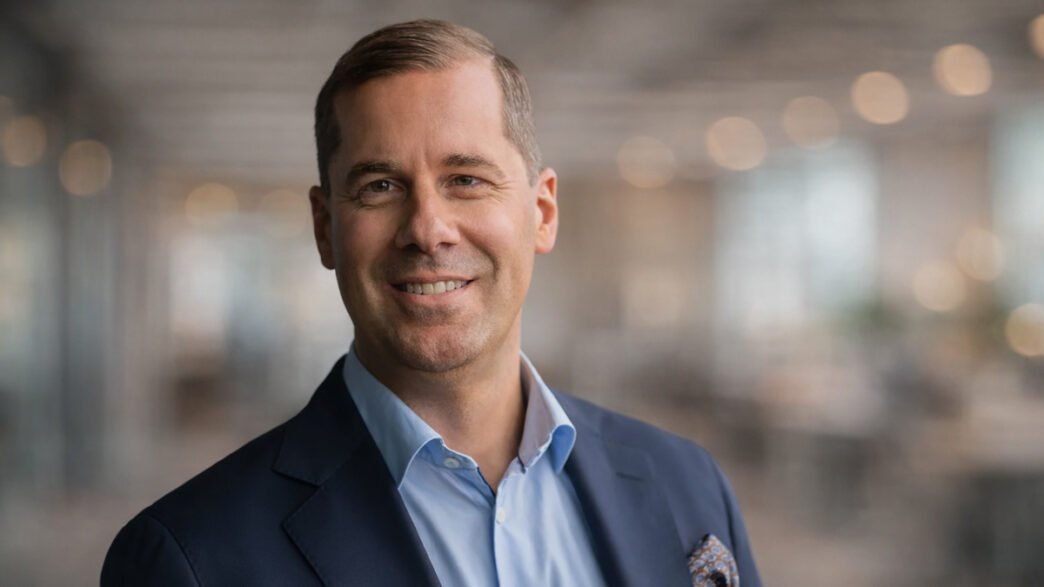
– Many companies have difficulty implementing AI projects when increased collaboration between different departments is required. In addition, it is common today for employees to incorporate AI tools into their work on their own initiative, without notifying the IT department. This exposes many companies to risks, which means they need to do something about this to reduce their vulnerability, says Mats Ericson, Regional Manager for the Nordic and Baltics at Nutanix.
In the Enterprise Cloud Index, 1,600 IT managers at companies with more than 500 employees answered questions about cloud services, containers and generative AI. The responses clearly show that the AI boom is forcing companies to modernize their IT infrastructure to be able to build and run applications more efficiently. A full 85 percent of the IT managers surveyed responded in the survey that containers – technology that makes it possible to efficiently deploy and run modern applications – have today become an important part of companies' IT infrastructure.




– Companies today need improved security and flexibility because AI can run anywhere. A common platform for virtual machines and containers would help more IT managers to confidently build AI solutions in both the cloud and their own data centers, says Mats Ericson.
Key findings from this year's report:
Organizational silos create new AI risks: AI creates innovations but also practical problems. 82 percent believe that lack of cooperation between business and IT makes it more difficult to implement technology projects, which slows down work and increases complexity.
Employees bring in their own AI tools: 79 percent of respondents encounter employees who bring in AI tools on their own, so-called shadow IT. 87 percent believe this poses risks – such as sensitive data and trade secrets being leaked.
Great potential in AI agents: A majority of IT leaders (61 percent) believe that AI agents improve the experience for customers and employees. 58 percent also believe that AI agents increase productivity and efficiency. 57 percent see opportunities to create new products, services or revenue using AI agents.
Data sovereignty is a high priority: 80 percent prioritize where data is stored when deciding on infrastructure and containers. Just over half (57 percent) want the infrastructure in a single country, either locally or in a local cloud service, primarily for security and privacy reasons.
Containers become the standard: Companies are investing in containers to handle AI and modern applications. 87 percent believe that use will increase in the next three years and 83 percent are already building new applications with containers. 85 percent believe that AI is driving the use of containers, which shows that companies' IT infrastructure needs to be updated.
The demands come from above, but the infrastructure doesn't keep up: 59 percent of IT leaders believe their companies will have more than five AI-powered applications within three years. At the same time, 82 percent believe that current infrastructure is not fully ready to handle AI workloads on-premises.
About the survey
Nutanix has conducted its eighth annual global survey on cloud, containers and generative AI. Wakefield Research interviewed a total of 1,600 cloud, IT and technology executives from companies with at least 500 employees in 14 countries in November 2025, including Australia, Brazil, France, Germany, India, Japan, Saudi Arabia, Singapore, the United Kingdom and the United States.
The full report is available here.
















 Swedish
 Danish
 Norwegian
 Finnish
 English
 German
 Dutch
Dutch