


Digital sovereignty is no longer decided in Brussels. What was once a political issue has become a responsibility that must be managed on an ongoing basis in daily work. Every cloud service choice, every AI investment, and every data flow affects how effectively your organization can comply with regulations, manage risks, and drive innovation and digitalization.
The development is driven by two clear changes in the market. Firstly, the rapid spread of AI in both the public and private sectors, and secondly, an increasingly comprehensive regulatory framework, where initiatives such as the EU's AI regulation impose new requirements on transparency, responsibility and control. This affects each actor's concrete decisions about where data is handled, how algorithms are controlled and which suppliers can be most effectively collaborated with in the long term.
At the same time, research shows that around 86 percent of the world’s leading digital platforms originate in North America, compared to around 11 percent in Asia and just 2 percent in Europe. This is despite Europe accounting for a significantly larger share of the world’s GDP (15–20 percent) and population (around 10 percent). In other words, European companies and governments are highly dependent on platforms developed outside the region.



This is important for several reasons. Firstly, digital platforms today form the basis of modern business processes. If European companies mainly use other people's solutions instead of developing their own, a large part of the value creation takes place outside the region. For Swedish companies that want to compete globally, this can affect both innovation capacity and competitiveness.
Second, digital sovereignty is fundamentally about some fundamental questions: Who is in control? Who has access to the data? Who decides under what conditions systems can be changed or even shut down? Often these questions are perceived as theoretical, but recent global events have shown how quickly dependencies can become concrete risks.
Thirdly, Europe is based on principles such as democracy, the rule of law and respect for the integrity of the individual. When AI becomes part of business processes and public services, these values must also be reflected in the technology used. The EU AI Regulation is an important step in that direction.
According to Gartner 61 percent of organizations in Western Europe plan to increase their use of local or regional cloud providers. This is a step towards better balance and regaining control over data, systems and dependencies that are business-critical. At the same time, technology priorities remain clearly linked to concrete results. Swedish organizations focus on increasing productivity, improving the employee work environment, lowering costs and reducing risks. The common denominator for all of this is automation.
Automation is one of the biggest opportunities to both streamline operations and make them more robust in relation to market and external changes. McKinsey estimates that organizations can reduce their operational costs by up to 30 percent through increased automation – while improving quality and reducing lead times.
At the same time, the ”Made in Europe” label alone is not enough. The solutions must be of high quality and deliver clear results. The goal is to ensure that European organizations have credible regional alternatives that combine technical quality with regulatory compliance and local control.
Therefore, Swedish organizations not only need to decide what technology they use, but also where it comes from, how it is governed and how it fits into both regulatory frameworks and long-term business strategies. In a world characterized by AI, data and automation control and trust become as important as functionality. Those who act early on this will be better equipped and can continue to develop on their own terms.
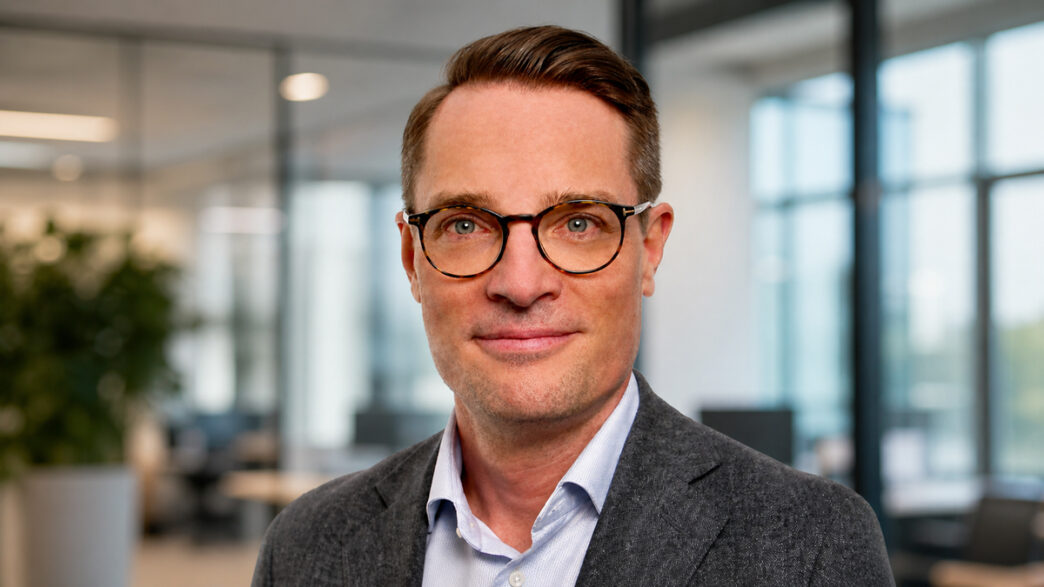
Of Henrik Åqvist, Sweden Manager at Matrix42











 Swedish
 Danish
 Norwegian
 Finnish
 English
 German
 Dutch
Dutch