



Frends launches State of Integration & AI 2026, a new European benchmark report that shows that knowledge workers lose the equivalent of one working day each week to manual tasks, costing a typical company with 1,000 employees approximately €10.7 million annually. The report, based on research conducted by Sapio Research in six European countries, also shows that only 26 percent of AI projects deliver measurable business value, pointing to a growing gap between AI ambitions and the operational capabilities required to deliver real results.
Based on a survey of 611 IT and business decision-makers In Germany, Finland, Sweden, Norway, Denmark and the Netherlands, the State of Integration & AI 2026 report shows that a typical European company with 1,000 employees loses €10.7 million annually due to manual work. On average, knowledge workers spend 7.6 hours each week on manual tasks that could be automated, equivalent to 44 full working days per year.
At the same time, the report shows that only 26 percent of AI projects lead to a measurable positive impact on results and profitability. Despite the rapid increase in investment in AI, most organizations still struggle to translate ambitions into practical results at scale. 63 percent of organizations are still in the investigation or pilot phase, while only 7 percent have implemented AI broadly in their operations. 


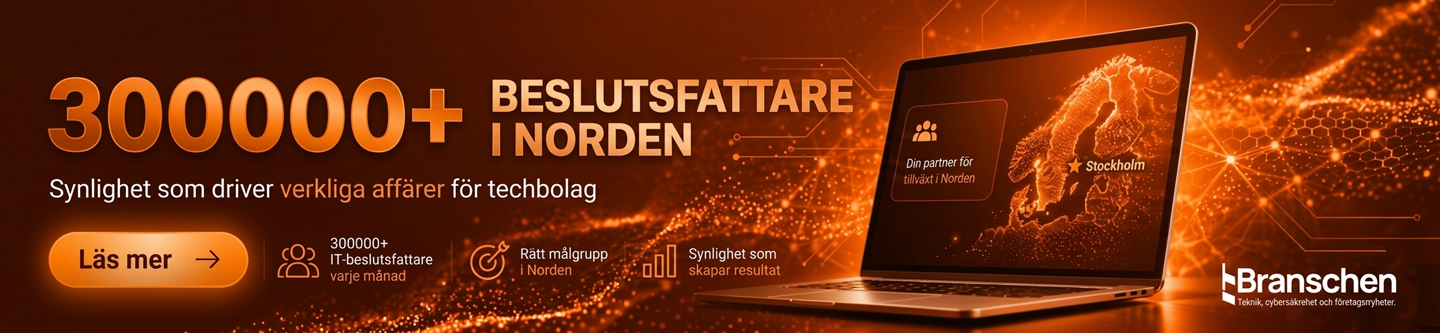
– AI will not lead to mass layoffs in the way many expect. The change is more subtle. What happens instead is that one person can now do the work that previously required several people, which means that companies do not have to hire the people they would otherwise have needed. The effect is seen in the lack of new hires rather than outright cuts, says Asmo Urpilainen, CTO at Frends.
Integration challenges slow down AI development
The report shows that the big challenge for European companies is whether they have the right conditions in place to make AI work in practice. Among organizations already using AI, 36 percent cite integration challenges as one of the biggest obstacles to further progress, on par with skills shortages and security issues.
Governance is also rapidly climbing the agenda. 64 percent of leaders consider centralized governance tools to be critical or very important, but only 12 percent currently see integration as a central layer for governance and control. According to the report, this creates clear risks around regulatory compliance and operational operations as organizations prepare for the EU AI Act, GDPR and other regulatory requirements.

– European data sovereignty has become a strategic issue for European companies. If organizations integrate sensitive data, decision logic or operational intelligence into AI-powered systems, they need to know exactly where the data is. Governance should be an enabler, not a bureaucracy. Without governance, it is not possible to scale up, at least not with maintained trust, says Moritz E. Behm, professor at Fresenius University Munich.
Major differences between European markets
The results at the country level show that Europe is far from developing at the same pace.
Denmark stands out as the most advanced market in the survey. The country leads in integration-first maturity at 38 percent, has the highest rate of AI implementation at 44 percent in production or widely deployed, and the highest AI project success rate at 32.6 percent.
Finland shows the clearest ”pilot trap” in the study. 45 percent of organizations are still in the pilot or proof-of-concept phase, while only 2 percent have implemented AI broadly.
Germany has the highest manual workload in the survey, with employees spending 8.5 hours per week on manual tasks. German organizations are also the most likely to cite integration complexity as the top AI barrier at 40 percent.
Sweden has the highest proportion of organizations working with AI and integration simultaneously at 43 percent, but the average success rate for AI projects is still below the European average of 21.2 percent.
The Netherlands reports the lowest amount of manual work at 6.6 hours per week per employee, but also the lowest success rate for AI projects at 21 percent in the survey.
Norway reports the largest time savings from AI and workflow automation, with employees saving an average of 22.3 hours per person per year through these technologies. At the same time, the country has the most fragmented integration landscape, with 21 percent of organizations using more than five integration platforms.
Clear differences between industries
The survey also shows large differences between different sectors.
Awareness of governance is strongest in the energy sector, with 77 percent believing centralized governance is critical or very important, but the sector is completely lacking in organizations where AI is widely implemented.
In the manufacturing industry, manual work continues to slow down progress, with an average of 7.3 hours per week spent on manual tasks. Data entry and data transfer are identified as one of the biggest bottlenecks.
In the public sector, manual work time is below the average of 6.5 hours per week, but 93 percent state that manual work increases the risk of human error, underscoring the direct impact on citizens and public services.
From AI ambition to real AI benefit
The report concludes that success is no longer just about AI ambitions, but about whether organizations have the operational capabilities needed to make AI work in practice. Organizations that have adopted an integration-first approach report faster project delivery, better returns on their AI and automation investments, and an easier path to widespread adoption.
State of Integration & AI 2026 was commissioned by Frends and was conducted independently by Sapio Research in April 2026.
About Frends
Frends is a European iPaaS company offering low-code and AI-enhanced solutions built for mission-critical automation that connect cloud, hybrid and on-premises systems with full transparency and visibility. Founded in Finland in 1988, the company has over 6,000 customers, including industry leaders, municipalities and public organizations such as Fazer, Mehiläinen, Haypp Group, Onemed, City of Helsinki and Eltel. Frend’s ease of use, integration and API management capabilities have been repeatedly recognized by G2 and the Gartner Magic Quadrant for iPaaS.









 Swedish
  Danish
  Norwegian
  Finnish
  English
  German
  Dutch
Dutch