



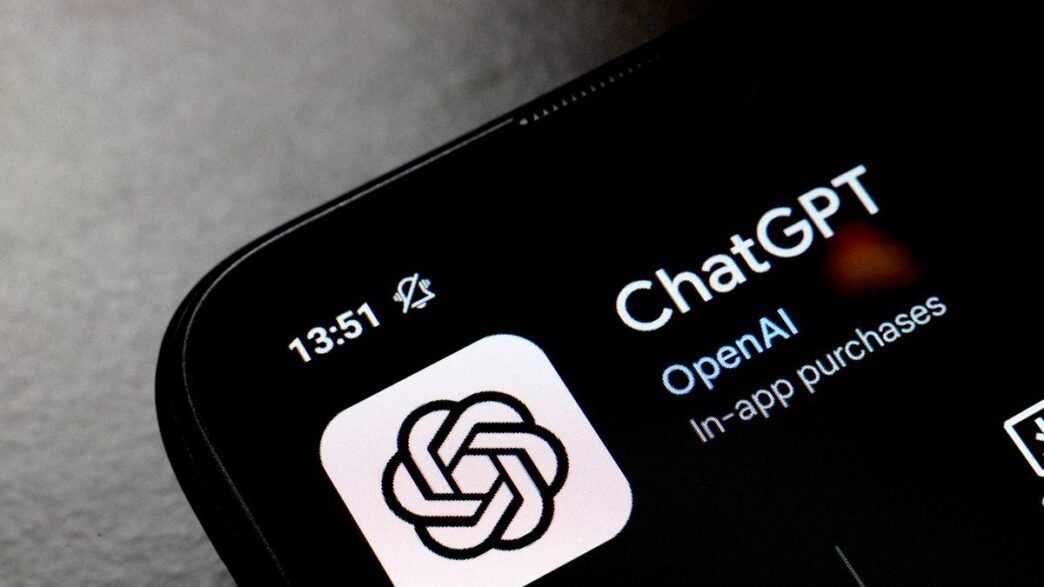
ChatGPT is about to become faster and more conversational as OpenAI is upgrading its flagship GPT-5 model to GPT-5.1.
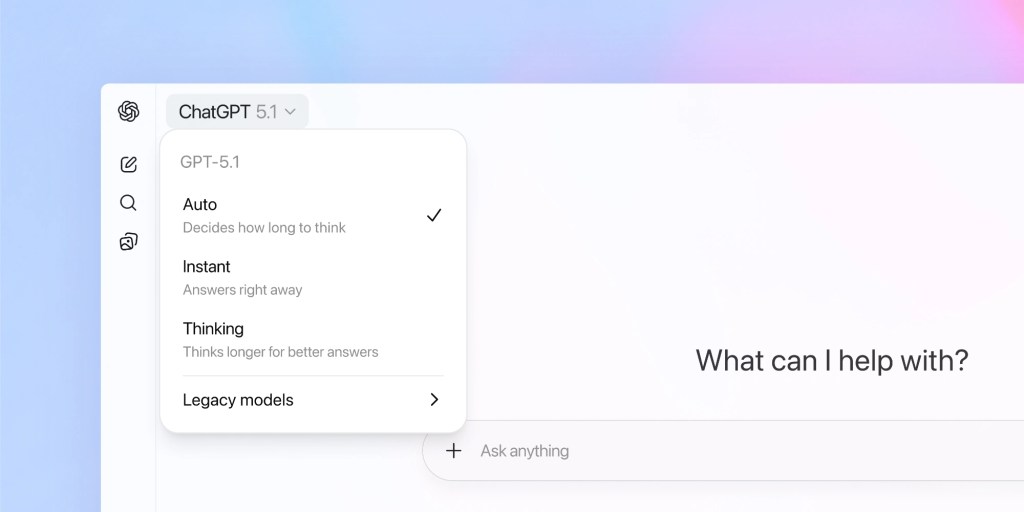
OpenAI has announced Two updates to the GPT-5 series: GPT-5.1 Instant and GPT-5.1 Thinking. Both models are now available on ChatGPT.
GPT-5.1 Instant, essentially the default model and the most widely used model, is now “warmer, more intelligent, and better at following your instructions,” according to OpenAI. At the same time, GPT-5.1 is Thinking is an advanced reasoning model that responds faster to simple tasks and more persistently to complex ones.


”We heard clearly from users that good AI should not only be smart, but also pleasant to talk to,” OpenAI wrote in a blog post. ”GPT-5.1 significantly improves both intelligence and communication style.”
The company added that both models offer a way for users to “shape the tone of ChatGPT,” allowing people to control how the chat platform responds depending on the conversation they are having.
Both models were launched for ChatGPT Pro, Plus, Go and Business users, as well as the free tier. Enterprise and Edu subscribers will get a seven-day early access to the models before GPT-5.1 becomes the standard model. OpenAI said the models can also be accessed via the API, both with custom reasoning.
OpenAI has noted that they will soon update GPT-5 Pro to version 5.1.
Immediate and thinking models
The T 5.1 tag reflects improvements to the base model, and OpenAI considers these to be part of the GPT-5 family, trained on the same stack and data as its reasoning models. The biggest difference between 5.1 and 5 is its more natural and conversational tone, OpenAI’s VP of applications, Fidji Simo, said in a statement. post on Substack. .
“Based on early testing, it often surprises people with its playfulness while remaining clear and useful,” OpenAI wrote in its post.
Instant can use adaptive reasoning to help it decide when it needs to think about its answers, especially when it comes to more complex questions. OpenAI noted that it has improved the model's instruction-following, so that while it continues to respond quickly, it also directly answers the user's question.
Recently released model versions, such as Baidu's ERNIE-4.5-VL-28B-A3B-Thinking, has outperformed GPT-5 in benchmarks such as instructions.
GPT-5.1 Thinking can decide for itself how much reasoning power to put into a prompt. It adapts to the type and complexity of a question, so it takes longer to answer a more complete and complex question than a simple summary query.
OpenAI said that evaluations showed that GPT-5.1 Thinking spends less time and therefore uses fewer tokens on simple tasks compared to GPT-5, outperforming the base model in response speed.
One thing that companies should note is that GPT-5.1 Thinking responds “with less jargon and fewer undefined terms.” OpenAI said that removing jargon makes Thinking more accessible when it comes to explaining technical concepts.
More personalization
Another big update of ChatGPT is increased personalization. This allows users to switch between a friendly and authoritative chat platform experience in their conversations.
ChatGPT already allows users to choose preset model tone options, but the new update expands these options “to better reflect the most common ways people use ChatGPT.”.
DE Options include “standard,” “friendly” (formerly “listener”), “efficient” (formerly “robot”), “professional,” “sincere,” and “quirky.” Two other personalities, “cynical” and “nerdy,” remain unchanged.

”We think many people will find that GPT-5.1 does a better job of bringing together IQ and EQ, but one standard clearly can’t meet everyone’s needs,” said Simo. ”That’s why we’re also making it easier to customize ChatGPT with a range of presets to choose from. The model has the same functionality whether you choose the standard or one of these options, but the style of its responses will differ – more formal or familiar, more playful or direct, more or less jargon or slang. Of course, eight personalities still don’t cover the full spectrum of human diversity, but we know from our research that many people prefer simple, guided control over too many settings or open options.”
You can also adjust how much ChatGPT uses emojis. OpenAI offers granular controls for responses and is experimenting with the ability to make the models more concise, warm, or scannable.
Save a rollout
OpenAI's rollout of GPT-5 was… everything else than perfect . While company executives, including CEO Sam Altman, praised the new model’s capabilities, the decision to initially retire older and beloved models on ChatGPT was met with discontent. Worse, many early adopters found that GPT-5 performed no better than older alternatives in areas like math, science, and writing.
This led Altman to backtrack on some of his statements about removing models, blaming performance issues on GPT-5's router. The router, which automatically routes queries to the most suitable models, will not go away, as GPT-5.1 Auto will route queries to the model type that is best able to answer questions.
OpenAI is careful to note that the GPT-5 models Instant, Thinking, and Pro are still available in ChatGPT’s model dropdown, although paying subscribers only have three months to compare these older versions with the 5.1 update. However, the GPT-5 sunset period will not affect models like GPT-4o.
”Going forward, when we introduce new ChatGPTmodels, our strategy is to give people plenty of room to evaluate what has changed and share feedback, allowing us to continue to innovate our front-end models while ensuring a smooth transition,” the company said. ”Sunset periods will be communicated clearly and well in advance.”










 Swedish
 Danish
 Norwegian
 Finnish
 English
 German
 Dutch
Dutch