




Looking for a Shorter Overview?
AI Summary
Key Moments
AI function ai_parse_document
New SQL-based AI feature that parses documents and preserves layout with support for multiple file formats.Cost and time efficiency
Significant savings for companies that do not have to build their own OCR solutions.Competition with Snowflake
Databricks responds to Snowflake's AI effort with a focus on costs and SQL integration.Benefits for Nordic IT companies
More efficient document management, new analysis capabilities and strengthened AI flows.Databricks increases the pace of competition with Snowflake by launching a new SQL-based AI feature that automatically interprets and structures documents. The feature is part of the company's Agent Bricks and will simplify the management of PDF files, images and Office documents.
The big boost is that organizations can now extract text, tables and figures from documents and make them searchable, analyzable and directly integrated into their data platform without traditional OCR flows.
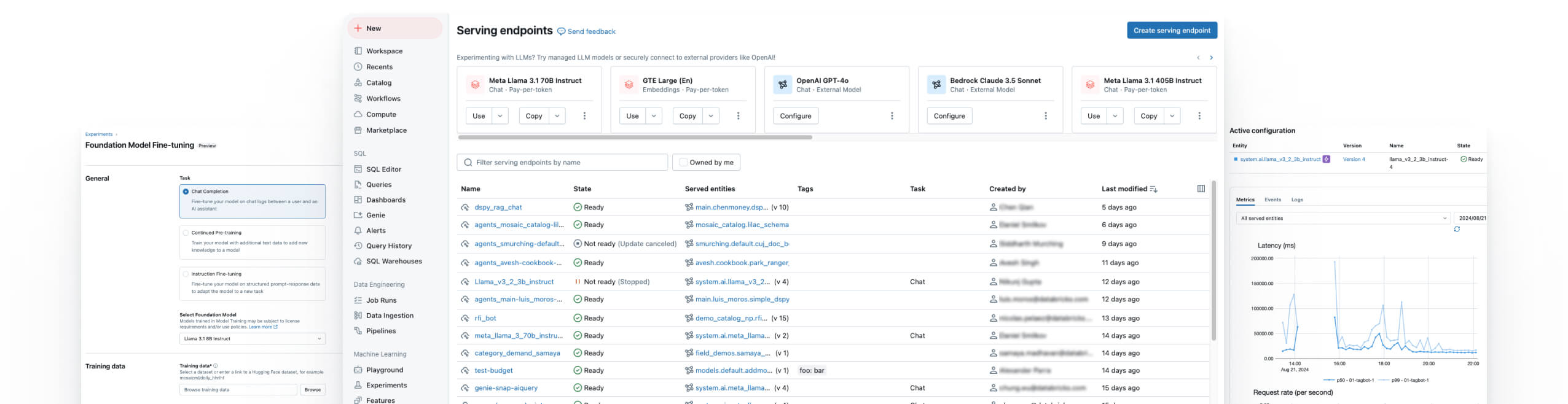
An AI function that makes documents database-readable
The new function is called ai_parse_document and is in public preview. It supports formats such as PDF, JPG, PNG, DOCX, and PPTX. The function can extract content with spatial metadata, which means that the layout and structure of the original document are preserved even after conversion.





This means that companies can:
- treat documents as tables
- use SQL for analysis, searchability and indexing
- automate pipelines that continuously pick up new documents
- integrate content with vector search and Unity Catalog
For companies that have previously built OCR tools and their own code, this means major time and cost savings.
Therefore, this is important for companies
Unstructured data has long been a stumbling block in data platforms. PDF reports, images, and presentations contain valuable information but are difficult to use in analytics and AI-based systems. Databricks wants to change this by making documents as easy to manage as database tables.
Three trends are driving the development:
- AI native data platforms are becoming the standard
- SQL interface simplifies adoption
- Cost savings compared to complex pipelines
Databricks also points out that price and performance are a crucial factor for companies that manage millions of documents.

Direct response to Snowflake's AI effort
Snowflake recently launched its own AI capabilities for document analysis under the name Agentic Document Analytics. Both companies offer similar tools, but Databricks places extra emphasis on cost benefits and a pure SQL flow.
Analysts believe that Databricks This solution reduces the need for manual integrations and is suitable for companies that already work SQL-based.
Effects for Nordic IT companies
For IT players in the Nordic region, this development means several advantages:
1. More efficient document management
Technical specifications, whitepapers and PDF reports become automatically structured and searchable.
2. New analysis possibilities
Information that was previously locked in PDFs can be integrated into dashboards and BI tools.
3. Lower development costs
Less need for OCR tools and customized code.
4. Stronger AI flows
RAG, chatbots, search engines and internal knowledge databases will receive better support.
5. Increased competition in the data platform race
The choice between Snowflake and Databricks becomes even more strategic and AI-centric.
Conclusion
Databricks SQL-based AI document analysis marks a step into the next generation of data platforms. The line between structured and unstructured data is blurred, and companies have completely new opportunities to leverage documents and files in their data and AI work.
The launch also strengthens competition with Snowflake and will influence how Nordic companies choose data platforms in the future.


















 Swedish
 Danish
 Norwegian
 Finnish
 English
 German
 Dutch
Dutch