





Looking for a Shorter Overview?
AI Summary
Key Moments
Jobbskapande genom försvarssatsningar
Höjda försvarsutgifter till 3,5 procent av BNP kan skapa omkring 48 000 nya jobb i Sverige till 2035.Ekonomisk tillväxt utanför försvarsindustrin
Investeringarna driver tillväxt i teknik, energi, bygg, logistik och tjänstesektorer utöver försvarssektorn.Behov av digitalisering och innovation
Försvars- och säkerhetssatsningar ökar kraven på digitala lösningar, cybersäkerhet och skydd av kritisk infrastruktur.Samarbete mellan försvar och näringsliv
Stark samverkan med civila marknaden är avgörande för en hållbar och robust försvarstransformation.Defense investments new jobs Sweden is now in focus as increased investments in both military and civilian defense are expected to have major effects on the Swedish economy. After several decades of underinvestment, Europe is facing a historic buildup of defense and security. Several European countries are moving towards the goal of allocating up to 5 percent of GDP to defense and security.
According to an analysis from EY Swedish defense investments in a scenario where defense spending is increased to 3.5 percent of GDP could contribute to creating around 48,000 new jobs by 2035. At the same time, annual revenues in the Swedish business sector are estimated to increase by approximately SEK 110 billion per year compared to current levels.
Historic build-up of Europe's defence and security
Europe's defense and security sector is currently characterized by low readiness, fragmented supply chains, outdated technology and vulnerable critical infrastructure. This is according to analyses from EY-Parthenon a result of long-term underinvestment. 



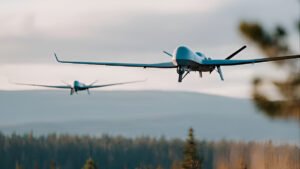
In 2024, the total defense expenditure in the Nordic countries corresponded to approximately 2.3 percent of GDP. Against the background of a more unstable security situation, European NATO countries are now moving towards a target of 5 percent of GDP for defense and security, with 3.5 percent for military investments and the remainder for broader investments in security and infrastructure linked to NATO.
The geopolitical situation has highlighted the need to quickly strengthen military capabilities while scaling up defense capacity and related value chains across Europe.
Increased demand far beyond the defense industry
I Sweden Defense and security investments in a 3.5 percent scenario are expected to generate annual revenues of around SEK 320 billion by 2035. This represents an increase of approximately SEK 110 billion per year compared to current levels.
A significant portion of the growth is expected to occur outside the traditional defense industry. Sectors such as technology, energy and supply, construction and civil engineering, logistics, manufacturing companies, and service businesses are expected to benefit greatly from the investments.
The development also means increased demands for digitalization, innovation and IT systems in both the public and private sectors. Defense and security-related investments are driving the need for new solutions in data cybersecurity, cloud services and protection of critical infrastructure.
It is crucial that there is strong collaboration between defense and an active business community where experience and expertise from the civilian market are utilized. This is a prerequisite for the transformation to be robust and sustainable and for Sweden to be able to scale up its capabilities at the pace required, says Fredrik Sjöstrom Partner and Head of National Security and Defence at EY Sweden.
Significant effects on the labor market
Defense and security investments in Sweden could contribute to creating around 48,000 new jobs compared to today. From a Nordic perspective, a corresponding modernization of defense and adjacent industrial structures could create up to 130,000 new jobs in total.
Development is not driven solely by traditional military needs. Hybrid threats, cyber risks, and the need to protect both digital and physical infrastructure mean that demand spans multiple sectors and requires increased collaboration between companies, industries, and countries.
As demand grows in so many parts of the economy, the pressure on the supply of skills also increases. For the investments to have full impact, both the state and the business community need to work more long-term to secure access to the right skills, says Fredrik Sjöstrom.
About the analysis
The analysis Implications of Defense and Security Spending Across Sectors is produced by EY Parthenon to highlight the economic opportunities that arise from increased defense spending in the Nordic countries. The aim is to show how the investments can create revenue and jobs not only in the defense sector but also in other parts of the economy.
External sources used in the analysis include SIPRI European Council and World Bank. The analysis was compiled in December 2025.

















 Swedish
  Danish
  Norwegian
  Finnish
  English
  German
  Dutch
Dutch