


Looking for a Shorter Overview?
AI Summary
Key Moments
AI's increased demands on data centers
AI is driving the need for more compact, efficient, and high-density solutions for power and cooling.Vertiv's strategic investments
Vertiv is expanding factories and optimizing production to meet demand.New cooling technology for high-density racks
Liquid cooling and prefabrication are crucial to handling future racks of up to 1 megawatt.The future of AI and energy efficiency
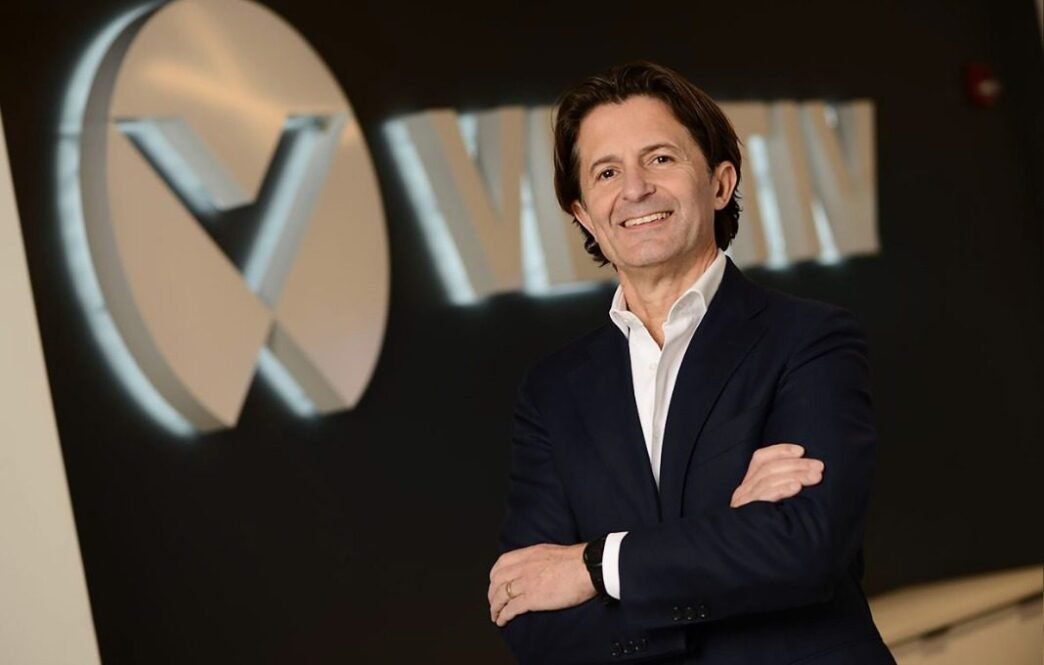
AI brings an annual growth of 15 % in infrastructure, with major challenges around energy efficiency.Giordano Albertazzi, CEO of Vertiv, he discusses the company's role in the rapidly growing data center industry and how Vertiv is adapting to meet the technological challenges that come with the AI revolution and the increasing demand for data center infrastructure.
Why is Vertiv crucial in today's world?
Ten years ago, the data center industry was not very visible, but even then we saw clear signs that it would become a mainstay of the global economy. “We saw the steady increase in data traffic, and we knew this trend was not going to slow down,” says Albertazzi. “Today, we see how new technologies, especially artificial intelligence (AI), are adding even more demand and accelerating growth.”
AI, now rapidly evolving, is changing not only society but also how data centers operate. To meet these changes, new design solutions and capabilities are needed. AI-powered systems require more compact and efficient power and cooling solutions, which creates new technical challenges. Vertiv, with its ability to rapidly innovate and scale its solutions, is in a strong position to meet these demands.




Vertiv's Growth and Preparations for the Future
In recent years, Vertiv has seen a dramatic increase in demand for its products and solutions. To address this growth, Vertiv has made strategic investments in its supply chain. “We have opened a new factory in South Carolina and are expanding capacity across our 23 facilities worldwide,” explains Albertazzi.
The company has also invested in optimizing efficiency through lean manufacturing to free up capacity in its existing facilities. “By working closely with partners like NVIDIA we ensure that our product roadmaps are in line with the latest developments in AI and data center.”
Technological Innovations and the Cooling of the Future
One of the most exciting technological innovations, according to Albertazzi, is the increasing use of graphics processing units (GPUs) and the data center redesign that this development is driving. “To put that in perspective: today racks operate at around 10 kilowatts, but we are already preparing for racks exceeding 100 kilowatts. We expect that in the future we will see racks operating at 500 kilowatts, and eventually maybe even 1 megawatt,” he says.
This extreme density in data center requires new cooling technologies, where liquid cooling has become an important solution. “Our ability to deliver complete solutions, which include heat rejection and prefabrication, allows us to meet the growing demand for efficiency and rapid implementation in these environments.”
AI and Energy Efficiency: Future Challenges
AI is still in its early stages of development, but its potential is enormous. Albertazzi sees AI as a game-changer for both companies and data centers. “AI will not only optimize processes but also enable machines to work together in ways we haven't seen before. As the technology matures, the more AI will be able to evolve and improve itself, which will accelerate progress,” he explains.
Despite this rapidly growing technology, there are some challenges, especially when it comes to energy efficiency. “AI will create a huge demand for advanced infrastructure that can handle these new needs. We are seeing annual growth of around 15 % in data center infrastructure demand, and this growth reflects the increasing need to support AI systems,” says Albertazzi.
AI and the Future of the Industry Until 2030
Looking ahead to 2030, Albertazzi is optimistic about the industry’s future. “AI will be essential for all industries. Companies that don’t embrace AI risk being left behind. For us, as the infrastructure providers for AI, it’s an exciting time to be in,” he says.
AI will not only transform the industry but also improve the customer experience, making it a critical factor in maintaining competitive advantage in the marketplace.
Vertiv's Future Technologies and Challenges
According to Albertazzi, future technologies related to AI and data center infrastructure are both exciting and challenging. “We will see a huge evolution in rack density. From 10 kilowatts today to 100, 500, and eventually 1 megawatt,” he explains. “This places completely new demands on both power and cooling. We are prepared for these challenges and are focused on developing solutions that can keep up with the rapid development of AI.”
Vertiv continues to invest in its technology portfolio, from network integration to chip-level power management, to ensure the company can meet these upcoming needs and help the industry grow efficiently.
To read more about Vertiv's products and their work on future technologies, visit their website. official website.


















 Swedish
 Danish
 Norwegian
 Finnish
 English
 German
 Dutch
Dutch