


AI development is driving an explosive increase in power and cooling needs in data centers. Within four years, data centers are expected to account for around three percent of the world's electricity use, according to the IEA, while the global battle over where to build next-generation AI capacity intensifies. In February, the Government Offices presented a new AI strategy with the ambition that Sweden will be one of the top ten AI nations in the world. If this is to become a reality, strategic choices in the infrastructure are required. One of them is to urgently move from air to liquid cooling in Swedish data centers.
A single question to an AI model uses about ten times as much energy as a typical internet search. This requires servers to have increasingly higher power density, which creates a cooling requirement that traditional air cooling has difficulty handling energy-efficiently. The energy issue is therefore not just a marginal cost, but a central investment factor. Sweden's AI ambitions are determined by where the investment capital ends up. The capital is looking for markets where the energy issue is solved from the start. This means that cooling must be modernized and that air cooling is replaced with liquid cooling.
The need for high-performance, high-density racks is therefore increasing rapidly. Already today, rack densities are around 40 kW and in some environments over 100 kW, which are levels that are difficult and costly to manage with air cooling alone. According to McKinsey & Co, liquid cooling systems can reduce energy consumption by more than 27 percent compared to traditional air cooling systems. Unlike traditional CPUs, GPUs and other AI accelerators generate a more concentrated heat load, which places higher demands on how the heat is managed. Liquid cooling that is directed directly to the components can significantly improve energy efficiency and at the same time enable heat recovery, for example for heating buildings.
For investors and operators, the issue is bigger than the technology itself, as energy is one of the largest running costs in a data center. According to Uptime Institute High rack density is the primary driver behind data center operators starting to adopt liquid cooling. As a result, liquid cooling has gone from being a competitive advantage to becoming a prerequisite for scaling AI infrastructure over time.
Higher initial investments in more efficient cooling can mean lower operating costs over time. This provides better capacity utilization and reduces exposure to future electricity price fluctuations. The alternative, to build on less efficient solutions, risks higher costs over the entire life of the facility.
If Sweden is to attract world-class AI investments, resource-efficient data centers are required where liquid cooling is built into the infrastructure.
Firstly The transition must be gradual. Data centers that are already in operation today cannot be rebuilt from scratch. Hybrid solutions, where air cooling and liquid cooling are combined, make it possible to gradually introduce more energy-efficient cooling as power density increases.
Secondly Clearer guidance is needed on how to integrate these hybrid solutions. There are established standards for both air and liquid cooling, but when the technologies are combined, room for interpretation arises around safety and retrofitting, which can increase project complexity and delay investment decisions.
Thirdly More expertise is needed throughout the chain. The industry need the right knowledge and capacity to operate, scale and maintain liquid cooling. This requires new specialist roles and training covering everything from heat recovery to operating high-density GPU environments.
Expanding AI capacity without simultaneously ensuring energy-efficient cooling is not sustainable in the long term, neither economically nor strategically. Sweden has the opportunity to be a leader in building a competitive, resource-efficient and scalable AI infrastructure, but this requires investments and prioritization that show that we are serious.
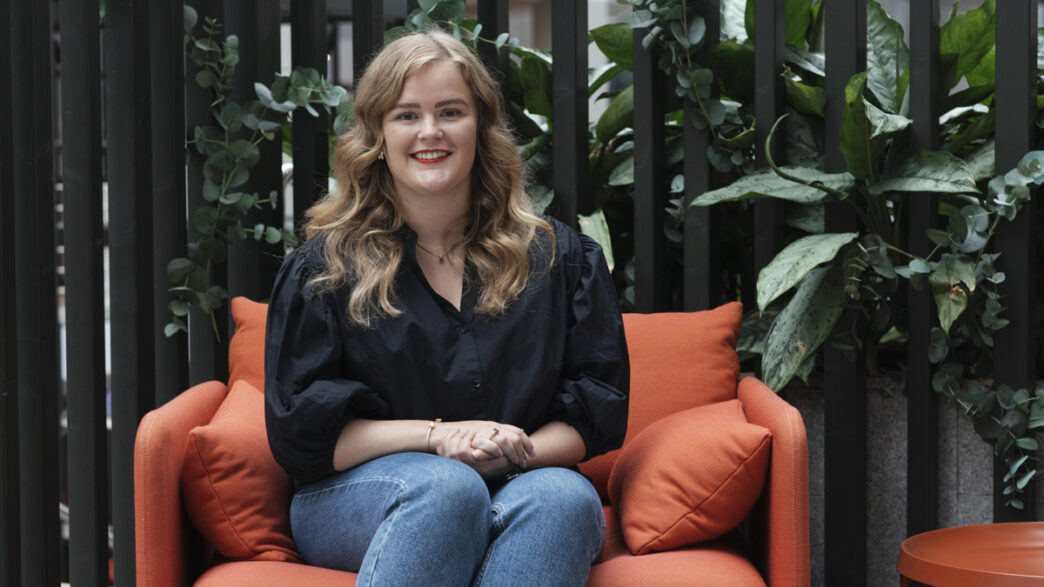
Hanna Oredsson, sales director for the data center area at Schneider Electric in Sweden.







 Swedish
 Danish
 Norwegian
 Finnish
 English
 German
 Dutch
Dutch