

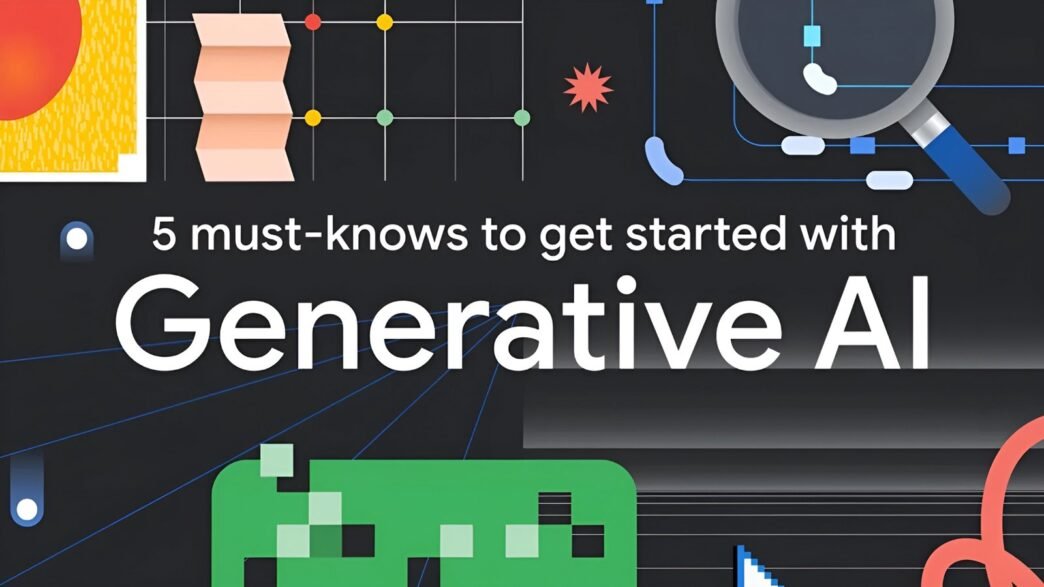
In today's ever-changing landscape, artificial intelligence (AI) not just a concept but a tangible force that shapes our world. Among its many applications, generative AI out as a beacon of innovation, offering both excitement and curiosity.
Generative AI, as the name suggests, empowers machines to create across a variety of media, from textual content to visual art, music, software applications, and immersive virtual environments. What sets it apart is its accessibility, democratizing the realm of machine intelligence for everyone.
We are used to encountering AI-powered tools in our daily lives, from personalized recommendations on platforms like Google and Amazon to curated playlists on Spotify. But the rise of generative AI marks a significant leap, empowering individuals to unleash their creativity in unprecedented ways and even develop their own AI-powered solutions.



In this article we delve into the transformative potential of generative AI, explores its possibilities and consequences for society.
Understanding Generative AI:
Generative AI leverages the principles of machine learning to simulate human creativity. Trained on large datasets, these models learn patterns and structures to autonomously generate new data. Unlike discriminative AI, which focuses on classification tasks, generative AI emphasizes the creation of new content that reflects the characteristics of the training data.
Applications of generative AI:
Initially, generative AI was used to generate text and images, but has evolved to encompass various applications:
- Image generation: Tools like Midjourney and Stable Diffusion translate textual instructions into vivid visual representations, allowing users to effortlessly realize their imagination.
- Text generation: Off ChatGPT to Google's Bard and Meta's Llama, generative text models enable the creation of a wide range of content, including essays, poetry, and even code snippets.
- Audio and videogenesis: Generative AI can produce lifelike voices, musical compositions, and video clips, revolutionizing multimedia content creation.
- Data generation: Synthetic datasets generated by AI facilitate the training of machine learning models while addressing privacy concerns.
- Virtual Environments: Generative AI is accelerating the development of immersive virtual worlds and paving the way for enhanced gaming experiences and architectural simulations.
Mechanisms for generative AI:
Generative AI relies on sophisticated algorithms, including:
- Large Language Models (LLM): Exemplified by GPT-4, these models analyze text data to generate coherent language.
- Generative antagonistic networks (GANs): GANs use antagonistic training to produce realistic images, audio, and video footage.
- Variational autoencoders: These models encode and decode data representations to generate synthetic output.
- Transformer Models: Known for their contextual understanding, transformer models enable nuanced data generation across different domains.
Real-world applications:
Generative AI has catalyzed groundbreaking innovations across various fields:
- Advertising: Coca-Cola's masterpiece ad combines AI-generated imagery with iconic artwork, capturing the audience's attention with unparalleled creativity.
- Music: AI-generated compositions, like a new Beatles song, demonstrate the potential for collaborative human-AI creativity.
- Engineering: Automakers like General Motors are leveraging generative design to optimize product development processes and improve performance.
- Healthcare: AI-driven drug discovery promises new treatments, exemplified by recent advances in cancer immunotherapy.
Ethical considerations:
While the potential of generative AI is enormous, there are ethical dilemmas:
- Disinformation: The spread of deepfakes blurs the line between reality and fiction and poses challenges to authenticity and trust.
- Integrity: Legislation is needed to regulate the ethical use of AI-generated content and protect individuals from exploitation.
- Employment: The automation of creative tasks raises questions about job attrition and the future of human creativity.
- Intellectual Property: Clarifying ownership of AI-generated content is crucial to addressing copyright issues and ensuring fair compensation for creators.









 Swedish
 Danish
 Norwegian
 Finnish
 English
 German
 Dutch
Dutch