


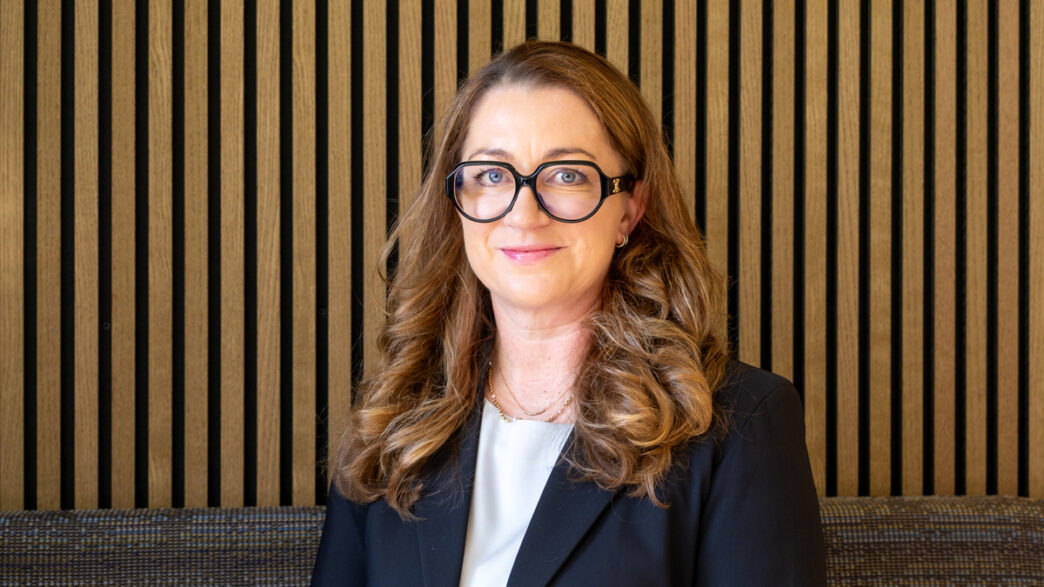
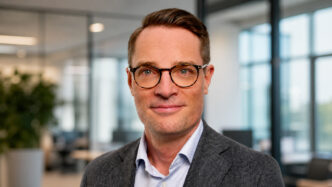
There is much talk about the strong competitiveness of Swedish industry, but competitiveness is determined in the factories. When productivity slows, geopolitics is uncertain and global competition intensifies, it is not enough to just increase competence and simplify regulations – Swedish industry must automate faster and on a larger scale, writes Susanne Dahl, VP of Industrial Automation in the Nordics and Baltics at Schneider Electric.
After the financial crisis, productivity growth in Swedish industry has slowed down sharply. Since 2011, growth has fallen to just over one percent per year, while productivity has effectively been stagnant for over a decade, according to the Swedish Industrial Employers Association.
This is not a marginal issue. Industry accounts for around 20 percent of Sweden's GDP and employs nearly 200,000 people in basic industry. When productivity stops, so does competitiveness and the Swedish economy. The question is not whether it is a problem, but how long we can afford to wait.


At the same time, the world is moving fast. In our latest report, Global Autonomous Maturity, global industry leaders highlight automation as a direct competitive issue and a key driver for increased productivity. The report also shows why pace matters: 59 percent warn of higher operating costs if implementation is delayed, 52 percent point to increased skills shortages and 48 percent to reduced competitiveness.
In a other study The same pattern is clearly visible: closed automation systems drive large hidden costs. The analysis indicates that on average this can correspond to 7.5 percent of turnover for medium-sized industrial companies.
One country that stands out in the report is Sweden. And not in a positive sense. A quarter of Swedish industrial companies have not yet begun their automation journey, despite technology being a crucial growth factor today. This creates a growing and worrying gap, not only in terms of industrial efficiency, but for our future competitiveness.
At the same time, there is a clear ambition to strengthen Swedish industry. From the AI strategy to Vinnova's investments in strategic technology and innovation clusters. But the focus is still on frameworks and analyses in the future, not on scaling up the technology here and now.
Sweden therefore risks getting stuck in a protracted implementation phase. We have the expertise, the technology and the conditions, but the pace of change and implementation is too slow, especially in small and medium-sized companies.
To reverse the trend and strengthen the competitiveness of Swedish industry, a clearer focus on implementation is required:
Go from pilot to production and scale up across the industry. To create real impact, automation, AI and digital solutions must be implemented broadly in production, not just in tests and isolated projects. This requires investments and changed working methods where implementation and optimization are prioritized over further analysis and feasibility studies.
Make automation a strategic management issue. Automation can no longer be treated as a technical issue. It must be integrated into business strategy and become crucial for decisions about investments, skills supply and long-term competitiveness. Otherwise, Swedish industry will quickly lose ground.
Ensure that the entire value chain can adapt. The major productivity effect is found across the industry. Therefore, targeted efforts, collaborations and business models are needed that make it possible for even smaller players to invest in and use advanced technology in their production.
What is missing today is not technology, but pace. If Swedish industry is to strengthen its competitiveness, automation must be prioritized now – in investments, in production and throughout the value chain.
About Schneider Electric
Schneider Electric is a global leader in energy technology, driving efficiency and sustainability by electrifying, automating and digitizing industries, businesses and homes. The company’s technologies enable buildings, data centres, factories, infrastructure and power grids to function as open and interconnected ecosystems – strengthening performance, resilience and sustainability. The portfolio includes intelligent devices, software-defined architectures, AI-powered systems, digital services and expert consulting. With 160,000 employees and a network of 1 million partners in over 100 countries, Schneider Electric is consistently ranked as one of the world’s most sustainable companies.



 Swedish
 Danish
 Norwegian
 Finnish
 English
 German
 Dutch
Dutch