


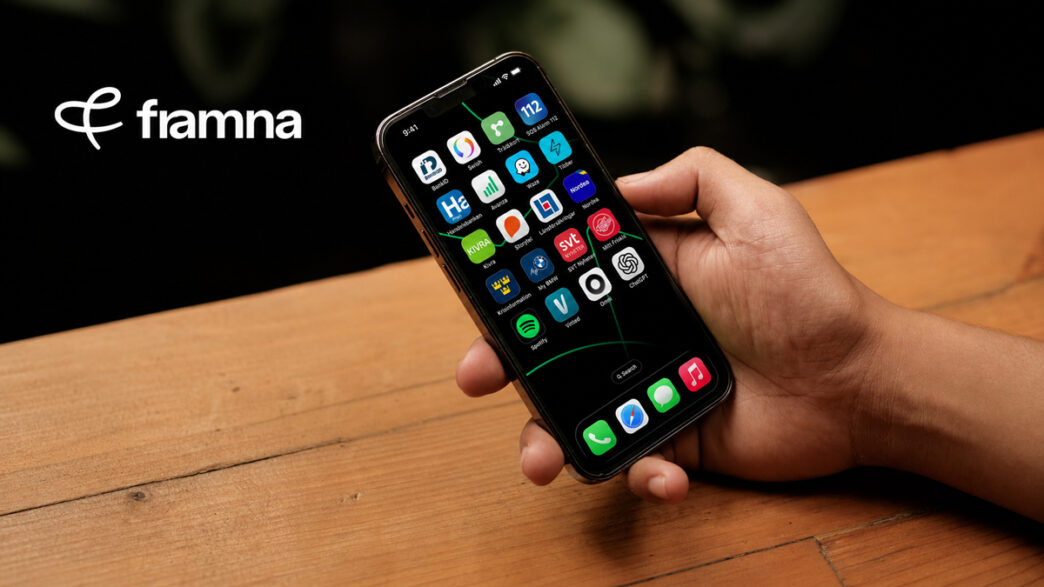

One in three Swedes now uses ChatGPT regularly, but four out of five AI apps receive lower trust than the average app on the market. A new report from digital product company Framna covering Sweden, Denmark and the Netherlands points out a growing paradox: we are sharing increasingly sensitive information with tools we don't trust.
The report Mobile App Trends Report 2026 Based on responses from 13,750 users and an analysis of 460 apps in Sweden, Denmark, the Netherlands and Poland, the results show that AI apps are growing faster than any other category measured by Framna, while trust in them is lagging behind.
Claude is the exception
Only one AI app stands out positively: Claude is the only one in the survey that is above the market average for trust, but is so far only used by a smaller group of users – mainly within Generation Z. 

ChatGPT is currently used by 40 percent of those surveyed in Sweden, but is significantly below the market average when users are asked to assess how their data is handled.
– Despite concerns about data and privacy, AI use has exploded. We are uploading increasingly sensitive content because the answers are so valuable, which has created a new reality where low trust is accepted as a condition, says Erik Ridman, CEO of Framna Sverige.

The next wave: the ultra-personalized app
According to the report, the way AI assistants remember context and adapt to the individual will change expectations of apps in general. Today, most traditional apps are opened “as if for the first time,” even for returning users.
“Many companies already have enough data to deliver something significantly more personal, but no one has seriously taken command of the ultra-personalized experience. It will be the next big wave in app development,”, says Erik Ridman.
We use most apps out of habit – not because we love them
The report also shows that 85 percent of the apps in the survey have a negative Net Promoter Score, despite being used regularly. In Sweden, Swish and the Swedish Tax Agency stand out as exceptions, with both high usage and high trust.
According to Framna, these four factors mainly determine whether an app is valued:
● Functionality: The app solves the job the user opened it for, adapts to the user and feels relevant over time.
● User experience and design: The service is intuitive, well-structured and visually appealing.
● Stability: The app is fast, smooth and works without technical problems.
● Trust: The user trusts that the app acts in their best interest and handles data responsibly.
Together, these four factors explain 76 percent of an app's overall rating. But the strongest factor is also the most fundamental: the app must solve the task the user opened it for.
– Some apps drown in new, advanced features instead of focusing on and delivering exactly what the user came there to do, concludes Erik Ridman.
About the report
The Mobile App Trends Report 2026 is produced by digital product company Framna, and the aim is to investigate which factors drive user satisfaction, loyalty and trust in mobile apps. 460 apps have been analyzed, and responses from 13,750 users in Denmark, Sweden, the Netherlands and Poland are included. The number of respondents in Sweden was 3,800.
About Framna
Coming soon is a digital product agency that develops digital products for clients such as Swish, SJ, Vattenfall and Essity. The agency was founded from the leading digital agencies Bontouch, Move and Shape and today brings together over 600 specialists in ten studios in Denmark, Sweden, Switzerland, the Netherlands, Poland and the USA.
More information is available at www.framna.com.






 Swedish
  Danish
  Norwegian
  Finnish
  English
  German
  Dutch
Dutch