



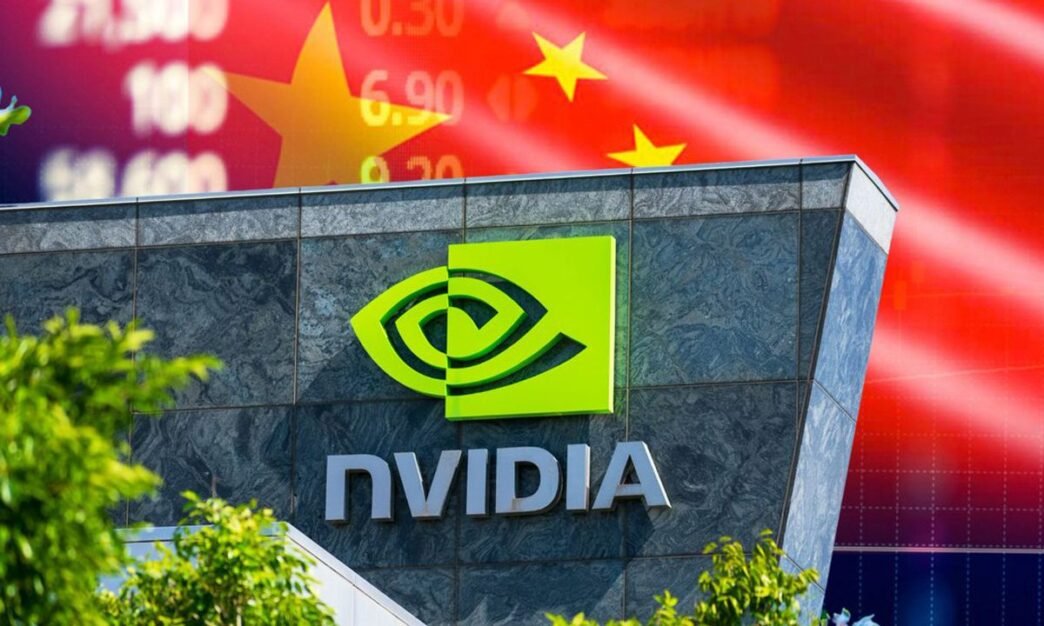
Nvidia CEO Jensen Huang says the tech giant has received approval from the Trump administration to sell its advanced H20computer chips which is used to develop artificial intelligence to China.
The news came in a blog post from the company late Monday, which said the US government had “assuranced” Nvidia that licenses would be granted — and that the company “hopes to be able to start shipping soon.” Shares of the California-based chipmaker were up more than 4% by midday Tuesday.
Huang also spoke about the coup on China's state television network CGTN, in comments shown on X.



“Today, I announce that the US government has approved our application for licenses to begin delivering H20 planes,” Huang told reporters in Beijing.
He added that half of the world's AI researchers are in China. "It's so innovative and dynamic here in China that it's really important for American companies to be able to compete and serve the market here," he said.
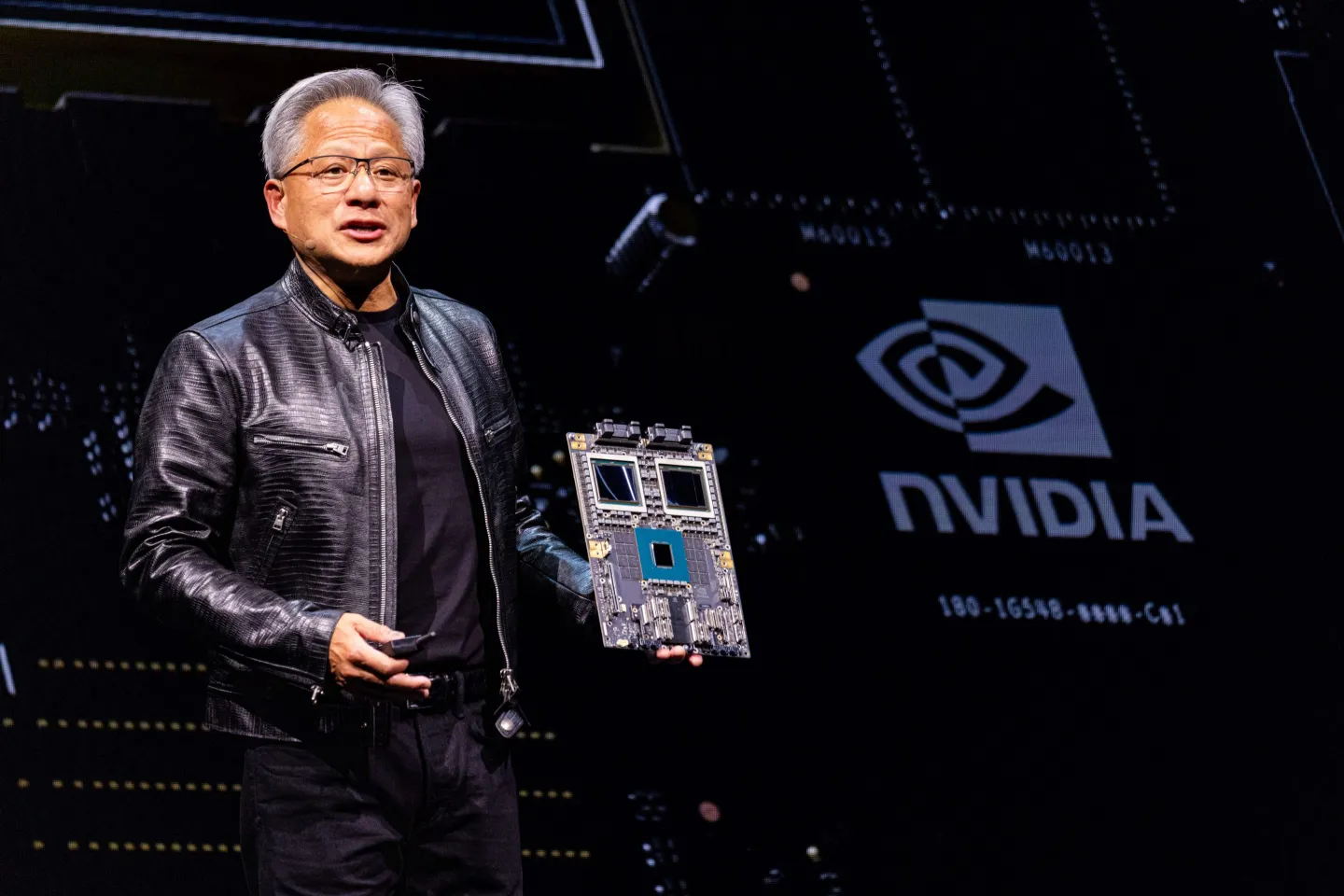
Huang recently met with President Donald Trump and other U.S. policymakers — and is in Beijing this week to attend a supply chain conference and speak with Chinese officials. The broadcast showed Huang meeting with Ren Hongbin, head of the China Council for the Promotion of International Trade, the host of the China International Supply Chain Expo, which Huang attended. Nvidia is one of the exhibitors.
Nvidia has benefited enormously from the rapid adoption of AI, becoming the first company to surpass $4 trillion in market value last week. However, the trade rivalry between the US and China has weighed heavily on the industry.
What is Nvidia's H20 chip?
The H20 graphics processor, or GPU, is an advanced AI chip – a type of device which is used to build and update a range of AI systems. But it is less powerful than Nvidia's main semiconductor today.
That's because the H20 chip was developed specifically to comply with US restrictions on exporting AI chips to China. Nvidia's most advanced chips, which have more computing power, are banned from the Chinese market.

For years, Washington has tightened controls on the export of advanced technology to China and referred to concerns so that knowledge intended for civilian use could be used for military purposes. And in January, before Trump began his second term, President Joe Biden's administration launched a new framework for the export of advanced computer chips used to develop AI – in an attempt to balance national security concerns surrounding the technology with the economic interests of producers and other countries.
Restrictions on the sale of advanced chips to China have been central to the AI race between the world's two largest economies, but such controls are also controversial. Proponents argue that these restrictions are necessary to slow China down enough to allow American companies to maintain their lead. Opponents, meanwhile, say the export controls have loopholes — and can still spur innovation. The rise of China's DeepSeek The AI chatbot in January, in particular, renewed concerns about how China could use advanced chips to develop its own AI capabilities.
What has happened since Trump took office?
In April, the White House announced that they would restrict sales of Nvidia's H20 chip to China – as well as the MI308 chip from rival chipmaker Advanced Micro Devices – with the Trump administration again citing national security.
At the time, Nvidia said those tighter export controls would cost the company an additional $5.5 billion — and Huang and other tech leaders have since lobbied Trump to lift the restrictions. They have argued that such restrictions hinder American competition in a sector of one of the world’s largest tech markets, and have also warned that U.S. export controls could pressure other countries against China’s AI technology.
Monday's announcement from Nvidia signals that their lobbying efforts have paid off. White House AI and crypto adviser David Sacks told Bloomberg on Tuesday that if Nvidia If Apple were allowed to resume Chinese sales of its H20 chip, it would help the United States better compete abroad – especially with Chinese chipmaker Huawei Technologies.
At the same time, Commerce Secretary Howard Lutnick said for CNBC on Tuesday that the renewed sales of H20 chips in China were linked to a trade agreement between the two countries over rare earths – and claimed that the administration also changed course from April restrictions because the US is still not selling China “our best stuff.”
Still, calls for restrictions on exports of advanced chips to China have persisted among US lawmakers on both sides of the aisle.
As recently as last week, Senators Elizabeth Warren and Jim Banks wrote a letter to Huang noting that the hardware used drives advanced AI “is of enormous strategic importance” – and warned again that this type of technology could be used to accelerate Beijing’s efforts to modernize its military if freely exported. US lawmakers have also proposed that chips subject to export controls be tracked to ensure they don’t end up in the wrong places.
In addition to export controls, California-based Nvidia – like other tech giants today – has been caught in the crosshairs of Trump’s tariff wars abroad, especially amid US reciprocal tariffs with China . But Beijing and Washington recently agreed to withdraw certain non-tariff restrictions China says it is approving permits for rare earth exports to the United States, while Washington has lifted restrictions on chip design software and jet engines.
Nvidia and its CEO have also won Trump's favor in recent months. In April, the company announced that it would produce its AI chips in the USA for the first time , starting with more than a million square feet of manufacturing space to build and test its specialized Blackwell chips in Arizona and AI supercomputers in Texas.
Trump quickly applauded Nvidia's moveHe presented Huang as a “smart cookie” who helped create jobs in the United States at an “Investing in America” event held at the White House later that month.
Like Nvidia, AMD is now also set to resume Chinese sales of its MI308 chips. The California-based company did not immediately respond to an Associated Press request for comment on Tuesday — but told several news channels that the Department of Commerce moved forward with license applications for these exports to China, and that they plan to resume shipments once these licenses are approved.









 Swedish
 Danish
 Norwegian
 Finnish
 English
 German
 Dutch
Dutch