




Trend Micro warns in its new report about cybercrime ai 2026 where autonomous attacks and AI-powered threats become the norm. Trend Micro presents its Security Predictions Report that predicts the year of cybersecurity 2026 and describes a year in which the true industrialization of cybercrime accelerates. The combination of AI and advanced automation allows threat actors to run entire campaigns autonomously, creating unprecedented speed, scale and complexity in today’s digital ecosystem. Enterprises face a series of challenges where both technical and organizational factors must be reevaluated to meet the new reality.
AI develops cybercrime ai 2026 into a self-driving industry
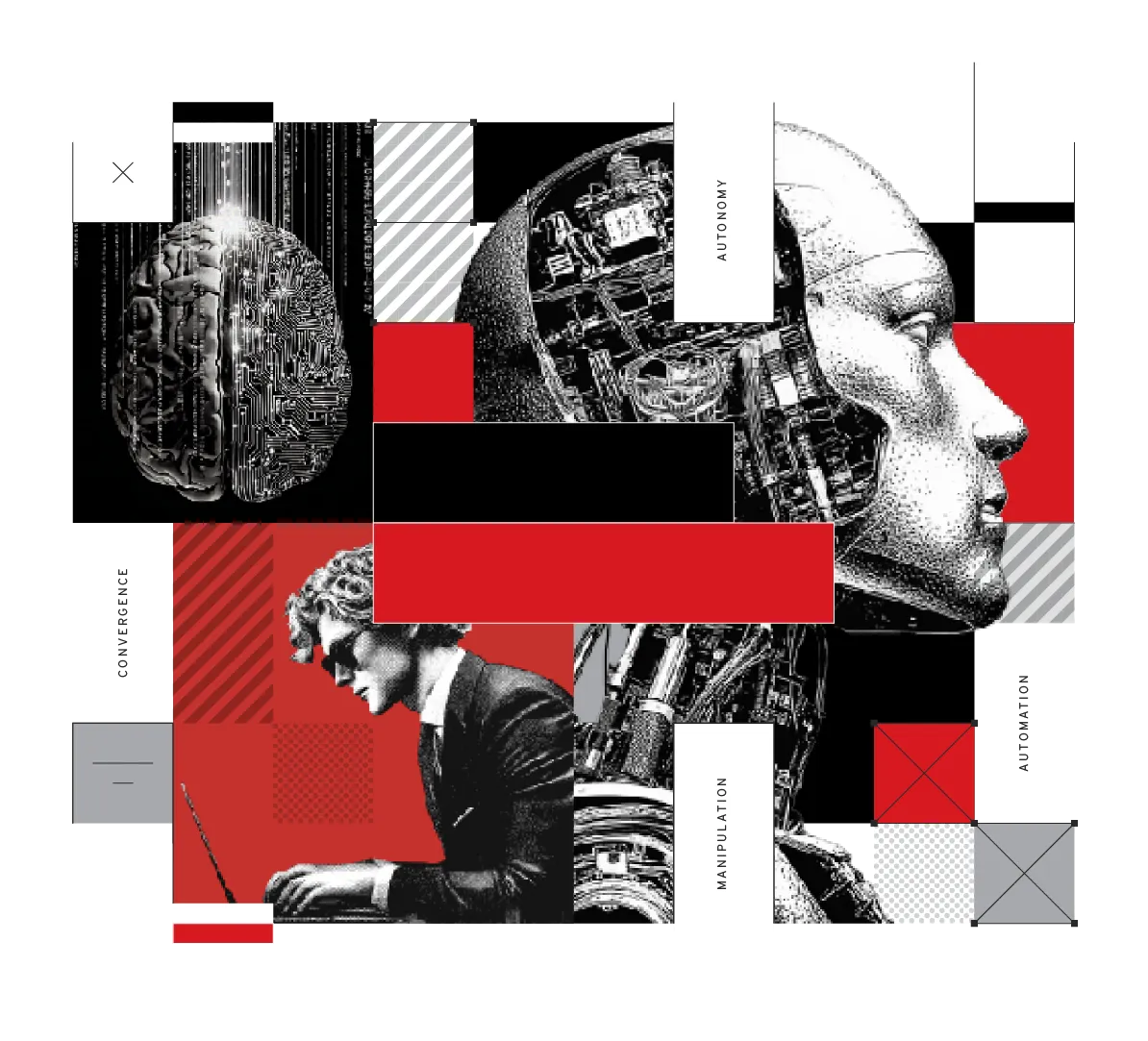
According to the report, 2026 will be the year when cybercrime goes from being a service-based business to becoming a fully automated industry. Martin Fribrock Sweden Manager at Trend Micro emphasizes that the development is moving towards AI agents that can find exploits and capitalize on security weaknesses without human intervention. Previously, teams of developers and operators were required to carry out coordinated attacks. Now, a single autonomous AI agent perform intrusions, create malware, analyze security defenses in real time, and optimize the attack chain without pauses or human constraints.
Autonomous intrusion campaigns that adapt in real time will become the norm. Generative AI provides attackers with the capacity to model hundreds of routes into systems, update malware at lightning speed, and refine the attack chain on an ongoing basis. This capability means that defenders no longer face a static adversary but a machine actor that learns from each block and continuously changes strategies and methods. This means that cybercrime ai 2026 reaches a level of automation that companies have never had to deal with before and that can push even the most advanced security organizations.
Deepfakes and synthetic attacks are becoming commonplace
The report also highlights the growing risk of social engineering through deepfakes and voice synthesis that are becoming increasingly difficult to distinguish from reality. Attackers can produce hyper-realistic videos and voice messages that mimic executives, customers or suppliers with minute precision. This opens up the possibility of sophisticated CEO fraud and convincing social engineering scenarios where requests for quotations, contracts or payment instructions can look completely authentic.
At the same time, Trend Micro warns of a new wave of synthetic attacks where large amounts of manipulated data, poisoned AI models and corrupted code modules are introduced into legitimate workflows. At a time when many companies rely on automated development tools and AI-generated code, a risk where threat actors can inject malicious logic into systems without detection. This blurs the line between innovation and exploitation and puts companies at risk of building critical business functions on undermined technical foundations.
New main targets for attacks in 2026
Hybrid cloud environments, global supply chains, and AI infrastructures are identified as particularly vulnerable targets. As organizations invest in distributed cloud platforms to increase agility while more dependencies arise between internal teams, external vendors, SaaS services, and automated systems, the attack surface increases dramatically. Threat actors are likely to target API connections, containerized applications, and AI models used for business-critical decisions.
According to Trend Micro According to forecasts, AI-based ransomware systems will also evolve into autonomous units. These systems identify vulnerable victims, map their networks, exploit weaknesses, and automatically negotiate with victims via autonomously controlled ransomware bots. AI-generated threat letters, dynamic ransom amounts, and continuous negotiations can take place without human intervention, allowing attackers to keep hundreds of parallel attacks running simultaneously. The result is faster, harder to track, and significantly more persistent ransomware campaigns than before.
Businesses need a new security framework
Martin Fribrock urges companies to shift from reactive to proactive defense. Security must be integrated into every layer of AI implementation, cloud-based applications, and supply chains. This requires a modern security framework built on full visibility, continuous automation combined with human verification, and an organizational culture where cybersecurity is viewed as strategic infrastructure rather than a technical measure. Companies also need to evaluate how their AI models handle input, check data quality, and ensure that automated pipelines cannot be manipulated externally.
Companies need to invest in solutions that can recognize autonomous attack chains, quickly classify risks, and block machine attacks before they gain a foothold. At the same time, training and internal skills development are required to ensure employees understand and manage the new AI-related risks. In the future, regulatory requirements are also likely to tighten, which means that organizations must have clear processes for logging, traceability, and model validation.
The way forward
Trend Micro Security Predictions 2026 highlights that future cyber threats are no longer just about technology, but about industrial capacity. As attackers scale their operations to levels previously unimaginable, it is critical that organizations build resilient and adaptive security structures. Proactivity is seen as the only effective way forward, where companies combine human expertise with machine speed to meet threats that operate at the speed of machines.













 Swedish
 Danish
 Norwegian
 Finnish
 English
 German
 Dutch
Dutch