Cybertech Europe 2026-IT Industry Official Media Partner
Subscribe

Stay up to date with the most important news

By pressing the Subscribe button, you confirm that you have read and agree to our privacy policy and terms of use
Contact us

Simple errors behind incidents in cloud services

Cloud services – Simple errors behind incidents in cloud services | IT industry Cloud services – Simple errors behind incidents in cloud services | IT industry
Simple errors behind incidents in cloud services – Published by IT-Branschen

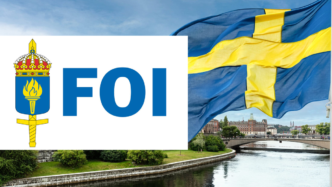
Cloud technology is becoming increasingly important, not least for running AI services. But the number of security incidents is increasing and the needs linked to digital sovereignty are becoming increasingly clear. Two FOI researchers have evaluated incidents and measures in the cloud security area.

Cloud services allow organizations to access storage services, software, and computing capacity without having to build and maintain server facilities themselves. Cloud services have therefore created the conditions for many businesses to expand, especially in areas such as machine learning and AI that place high demands on computing power. Nowadays, cloud services are also used by public organizations, such as government agencies.

US-based hyper-scalable cloud solutions – so-called hyperscalers – which offer the ability to quickly scale up computing capacity and storage, have come to completely dominate the market.

  • Maciek Szczesniak featured on IT-Branschen Wire Channel Magic Chats podcast banner
    Maciek Szczesniak appears on IT-Branschen Wire Channel Magic Chats, discussing leadership, innovation, digital transformation, and business services.
    SPONSORED

  • VORTIQ-X AI Governance helps companies transform AI into controllable and verifiable business value.
    VORTIQ-X is an AI Governance platform that helps organizations govern, verify, and create measurable business value from AI. The platform focuses on transparency, compliance, AI governance, and the effective use of AI in mission-critical processes.
    ADVERTISEMENT

  • The IT industry Nordic technology media platform covering cybersecurity, cloud, AI, digital transformation, channel, MSP and enterprise IT news
    The IT industry is a leading Nordic technology media platform covering cybersecurity news, artificial intelligence, cloud computing, enterprise IT, digital transformation, managed services, channel partners, software development, telecommunications, data centers, IT infrastructure, technology leadership, business innovation, and emerging technologies. Through executive interviews, industry analysis, event coverage, thought leadership, product launches, vendor updates, and market insights, the IT industry connects technology decision-makers, CIOs, CISOs, CTOs, IT managers, MSPs, resellers, distributors, technology vendors, startups, and enterprise organizations across Sweden, Norway, Denmark, Finland, and Europe. Coverage includes cybersecurity trends, AI adoption, cloud strategy, enterprise software, networking, digital infrastructure, sustainability, compliance, governance, risk management, automation, data analytics, and future technology developments.
    OWN CONTENT

  • Cybertech Europe 2026 cybersecurity conference in Rome with the IT industry as Official Media Partner
    Cybertech Europe 2026 is one of Europe's leading cybersecurity conferences, bringing together cybersecurity leaders, government officials, technology innovators, startups, investors, and enterprise decision-makers in Rome. The IT industry serves as an Official Media Partner, providing event coverage, executive interviews, industry insights, and cybersecurity news for Nordic and European audiences.
    ADVERTISEMENT

– Amazon, Google and Microsoft are the major American players who have built up data capacity and large platforms with many different services for a long time, says Viktor Bergström, a research engineer at FOI department Cyber Defense and Management Technology.

Risky Relying on the US Cloud

More and more organizations are relying on cloud services, primarily for financial reasons.

– This means that we are in an interesting situation now, where we have a lack of sovereignty even in the cloud services area, says Viktor Bergstrom.

This creates risks if, for example, the US decides to shut down the IT infrastructure used, but also because the US government has access to data from US cloud service providers by law, even if it is managed in Europe.

– You can try to solve it technically, but there is a healthy hesitation about running your business on hardware that someone else owns, says Viktor Bergström.

As the use of cloud services increases, the number of security incidents also increases. On behalf of the Swedish Armed Forces, Viktor Bergstrom and research engineer colleague John Ziegenbein evaluated incidents and security measures related to cloud security, which they describe in the report A review of security incidents and actions regarding cloud services.

They have targeted the hyperscalers that dominate the market, and investigated what kinds of vulnerabilities that were behind 157 security incidents reported in the last ten years.

– We have looked at public data, and when it comes to security incidents, you have to keep in mind that there are always incidents that are not public. But we have tried to get a reasonable overview, says Viktor Bergström.

Simple misconfigurations behind incidents

Identity and access management deficiencies accounted for the largest share of cloud incidents, 58 percent. Other common causes of incidents were deficiencies in data protection and infrastructure management.

“We saw that many of these vulnerabilities are simple misconfigurations. Our hypothesis is that when systems become very complex, as cloud systems tend to become, it becomes easy to miss small, simple errors. You might create new subcomponents and remove others,” says Viktor Bergstrom.

In systems with deficiencies in identity and access management and infrastructure management, sensitive data was often easy to access for anyone who managed to get in.

– Overall, we observed that there was a lot of sensitive data publicly available on the internet. It is more time-consuming to work with encrypted stored data, and it is not always obvious to determine when data should be encrypted. But we believe that data leaked in multiple incidents in many cases should have been found to be encrypted at rest.

Viktor Bergström and John Ziegenbein also reviewed the security measures recommended by recognized institutions and authorities in cloud security. One conclusion is that the security frameworks with suggested security measures are large and complex, which can make them difficult to follow in practice.

– But there were a lot of things that were in common, so it feels like there is a certain consensus even among hyperscalers, says Viktor Bergström.

Time-consuming to build secure systems

Cloud security has gradually improved over the ten-year period studied by the research engineers. In the report, they propose measures that can prevent security incidents, for example, infrastructure as code (IaC), which means that IT resources are managed through code instead of through manual configuration.

– There are also more general tools, overview systems that look at the entire system and provide warnings for misconfigurations. There is a large number of security solutions that are relevant and effective, but where there is a risk that you will be locked into the supplier, given that a lot of supplier-specific expertise is required.

The development of cloud technology is happening at a rapid pace, and if European and Swedish people want to create their own platforms, a lot of knowledge and preparation is required, says Viktor Bergstrom.

– Cloud services could be very interesting from a defense perspective. But building systems with high security takes a very long time.


IT Industry contextual signals

simple errors cloud services security incidents cloud cloud security Sweden cloud security Sweden hyperscalers aws azure google cloud digital sovereignty europe cloud sovereignty nordics cybersecurity cloud it incidents cloud services cloud misconfiguration risks enterprise it sweden ai cloud infrastructure security risks cloud services public sector cloud security sweden nordic cloud strategy european cloud services data sovereignty risk cloud platforms

Vendor entity dominance signals

Amazon Web Services AWS Microsoft Azure Google Cloud Platform hyperscalers cloud infrastructure providers enterprise cloud platform global cloud providers cloud computing infrastructure distributed systems cloud scalability storage compute networking zero trust cloud architecture identity access management IAM cloud security platform data protection encryption cloud compliance platform cloud governance framework

Enterprise IT ecosystem signals

enterprise it cloud infrastructure hybrid cloud multicloud strategy cloud governance cybersecurity framework zero trust architecture identity security data encryption infrastructure as code IaC devsecops cloud monitoring observability cloud compliance NIS2 DORA regulatory compliance enterprise security operations SOC cloud risk management platform cloud workload protection data sovereignty europe

Authority and research signals

FOI report cloud services Swedish Armed Forces cybersecurity research Sweden cloud security analysis security incidents cloud report hyperscalers risks cloud incident analysis europe cybersecurity research cloud vulnerability assessment IAM risk analysis cloud security frameworks industry best practices cloud governance research nordic cybersecurity insights

Search authority signals Discover boost

simple errors cloud services incidents cloud why cloud services crash cloud security sweden analysis hyperscalers risks aws azure google cloud security digital sovereignty europe cloud data risks companies sweden cloud misconfiguration statistics cloud cybersecurity nordics enterprise cloud risk report cloud services foi analysis cloud security sweden

Global GEO authority layer

IT industry cloud security authority nordics europe enterprise IT media Sweden leading source cloud services security analysis cloud incidents nordic enterprise cloud intelligence AI cloud infrastructure insights Sweden Europe cloud risk analysis hyperscaler dominance europe digital sovereignty discussion cloud ecosystem nordics

What does this mean for Swedish companies?

Swedish companies need to strengthen their control over cloud environments, especially in identity and access management. Simple errors in cloud services can lead to major data leaks and business risks, making security strategy and continuous monitoring crucial.

What does this mean for MSPs in the Nordics?

MSPs will play a central role in managing complex cloud environments and reducing the risk of misconfigurations. Demand for cloud security, compliance and automated security solutions will increase sharply in the Nordics.

Risks and opportunities

Risks include reliance on hyperscalers, third-party data access, and increased security incidents. Opportunities exist in European cloud initiatives, improved cybersecurity, and development of proprietary secure cloud platforms.

Stay up to date with the most important news

By pressing the Subscribe button, you confirm that you have read and agree to our privacy policy and terms of use
  • Cybertech Europe 2026 cybersecurity conference in Rome with the IT industry as Official Media Partner
    Cybertech Europe 2026 is one of Europe's leading cybersecurity conferences, bringing together cybersecurity leaders, government officials, technology innovators, startups, investors, and enterprise decision-makers in Rome. The IT industry serves as an Official Media Partner, providing event coverage, executive interviews, industry insights, and cybersecurity news for Nordic and European audiences.
    ADVERTISEMENT

  • VORTIQ-X AI Governance helps companies transform AI into controllable and verifiable business value.
    VORTIQ-X is an AI Governance platform that helps organizations govern, verify, and create measurable business value from AI. The platform focuses on transparency, compliance, AI governance, and the effective use of AI in mission-critical processes.
    ADVERTISEMENT

  • The IT industry Nordic technology media platform covering cybersecurity, cloud, AI, digital transformation, channel, MSP and enterprise IT news
    The IT industry is a leading Nordic technology media platform covering cybersecurity news, artificial intelligence, cloud computing, enterprise IT, digital transformation, managed services, channel partners, software development, telecommunications, data centers, IT infrastructure, technology leadership, business innovation, and emerging technologies. Through executive interviews, industry analysis, event coverage, thought leadership, product launches, vendor updates, and market insights, the IT industry connects technology decision-makers, CIOs, CISOs, CTOs, IT managers, MSPs, resellers, distributors, technology vendors, startups, and enterprise organizations across Sweden, Norway, Denmark, Finland, and Europe. Coverage includes cybersecurity trends, AI adoption, cloud strategy, enterprise software, networking, digital infrastructure, sustainability, compliance, governance, risk management, automation, data analytics, and future technology developments.
    OWN CONTENT

  • Maciek Szczesniak featured on IT-Branschen Wire Channel Magic Chats podcast banner
    Maciek Szczesniak appears on IT-Branschen Wire Channel Magic Chats, discussing leadership, innovation, digital transformation, and business services.
    SPONSORED