



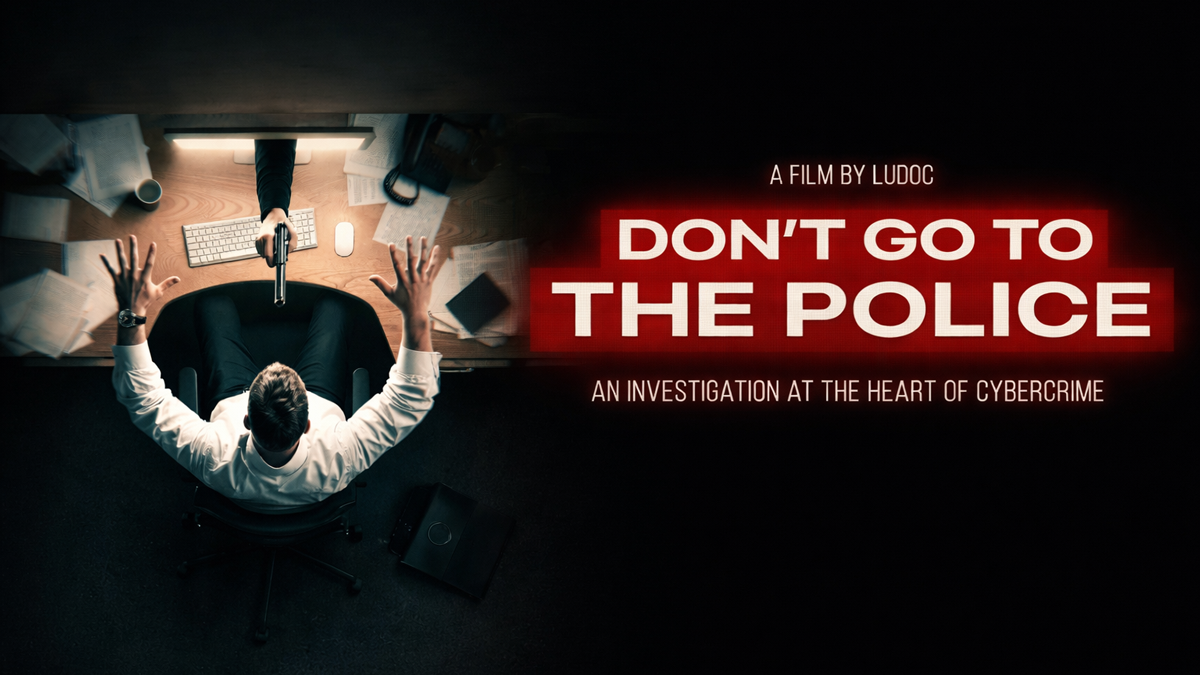

Orange Cyber Defense, Europe's leading provider of cybersecurity services, today presents the documentary ”Don’t Go to the Police”. The 56-minute long the film, directed by Ludoc, provides a unique insight into the hunt for LockBit, one of the most prolific cybercrime syndicates. The group operated between 2019 and 2024. The film reconstructs the internal dynamics of the ”cyber mafia” networks and hacktivist collectives. It also shows how sophisticated cybercriminals are, which can serve as a wake-up call for both business leaders and the public.
A single click, 350,000 companies affected
The documentary begins with a ransomware attack, which takes place in France in December 2023. A single click, by an employee of a client of the company COAXIS, a small business based in Lot-et-Garonne, leads to a complete shutdown of operations, but also to 350,000 customers across France being affected with just a few days before Christmas. A race against time begins between experts from Orange Cyber Defense and Coaxis, on the one hand, and the cybercriminals at LockBit, on the other. For the company, it's about protecting its customer data and rebuilding 25 years of IT systems in just one month.

The digital pandemic from the inside
The film also depicts the extensive international manhunt for the LockBit group. Director Ludoc (co-founder of Studio Bagel) and defense journalist Romain Mielcarek travel from London and New York to Paris, Stockholm and Washington D.C. There they interview 18 prominent experts, including FBI agents and OFAC investigators, as well as Orange Cyber Defense Swedish CTO, Peter Larsson.



By highlighting the economic, psychological and societal consequences of this type of attack, it shows ”Don’t Go to the Police” that cybersecurity is a shared responsibility. From citizens and employees to CEOs and businesses, everyone plays an important role in building a shared digital protection.
56 minutes to understand the threat landscape
Pictures often speak louder than words. The documentary aims to influence people's perception and understanding of cyber threats. Despite increasing awareness, cyber extortion cases rose by 45 percent in 2025. The attacks affect economies, democracies and public trust. Phishing, which now also leverages artificial intelligence, has become one of the most effective attack vectors today.

-Our ambition is to lift cybersecurity out of its "expert bubble" and show the public that it is an important societal issue, just like drug trafficking, says Kare Nordstrom, Head of Sweden for Orange Cyberdefense. By putting a face to a reality that is often misunderstood, we want to highlight that basic digital hygiene is no longer a choice, but a necessity for everyone. Together, we must build cybersecurity that can protect our economies and our democracies.
In addition to a special screening in Stockholm, the film is available here: https://dontgotothepolice.orangecyberdefense.com/se









 Swedish
 Danish
 Norwegian
 Finnish
 English
 German
 Dutch
Dutch